
Your Guide to the Pumapungo Museum + Ruins in Cuenca Ecuador

The Pumapungo museum in Cuenca brings together history, culture, and nature in one place. Inside, you’ll find exhibits on Indigenous traditions, archaeological artifacts, and temporary displays that highlight Ecuador’s cultural past and present.
Step outside, and the experience expands to the Pumapungo ruins, a small farm with traditional crops and llamas, and a bird sanctuary that’s home to a variety of colorful tropical birds.
During my time in Cuenca, Pumapungo quickly stood out as a museum worth exploring. In this guide, I’ll walk you through the museum layout and what to expect in each area, so that you can see why it’s worth adding to your time in Cuenca.
This article may contain affiliate links. This means if you click a link on my website and make a purchase, I earn a commission at no additional cost to you. For full information, please see my disclaimer here.
Museo Pumapungo
Museo Pumapungo in Cuenca is the most popular museum in the city. Inside, you’ll find collections that cover everything from Indigenous traditions and pre-Hispanic artifacts to rotating temporary exhibits that highlight Ecuador’s culture, past and present.
Step outside, and the experience expands into the ruins of Pumapungo, a small farm with llamas, and a bird rescue center. Here’s a brief breakdown of the layout of Pumapungo museum.
Ethnographic Collection – 2nd Floor
This was easily my favorite part of the Pumapungo museum. The second floor focuses on the many Indigenous cultures of Ecuador, with an emphasis on communities from the Amazon—a region I knew little about before visiting. The exhibits are rich with detail, from ritual objects and photographs to life-sized mannequins dressed in traditional clothing used during festivals like Inti Raymi.

One of the most popular displays is a small case containing tzantzas, or shrunken heads, once made by the Shuar people. I had already learned about these at the Intiñan Museum near Quito, but seeing them up close, with more context and cultural explanation was fascinating.
The layout feels immersive in places. Some exhibits require you to move panels or open display boards to reveal additional images or stories, encouraging you to slow down and explore.

There’s also a striking Tigua painting, the colorful folk art style from the area around Quilotoa Lake, that gives a vivid sense of how highland communities interpret their own landscapes and traditions.
Archeology Room
This part of the Pumapungo museum feels a bit newer and it’s not mentioned in other guides. It’s a compact collection of archeological pieces. It features artifacts used in daily life by Ecuador’s pre-Hispanic cultures—tools, clay vessels, grinding stones, and other utilitarian objects.
I found it interesting, but I wish there had been more explanation alongside the displays. Each section ends with a small interactive component that’s great for kids. You’ll pass through this section on your way to the Pumapungo ruins.
Temporary Exhibits at Museo Pumapungo
The temporary exhibits at Pumapungo rotate throughout the year, so what you’ll see depends on when you visit. The topics may include spiritual practices, regional textiles, contemporary art and themed cultural displays.

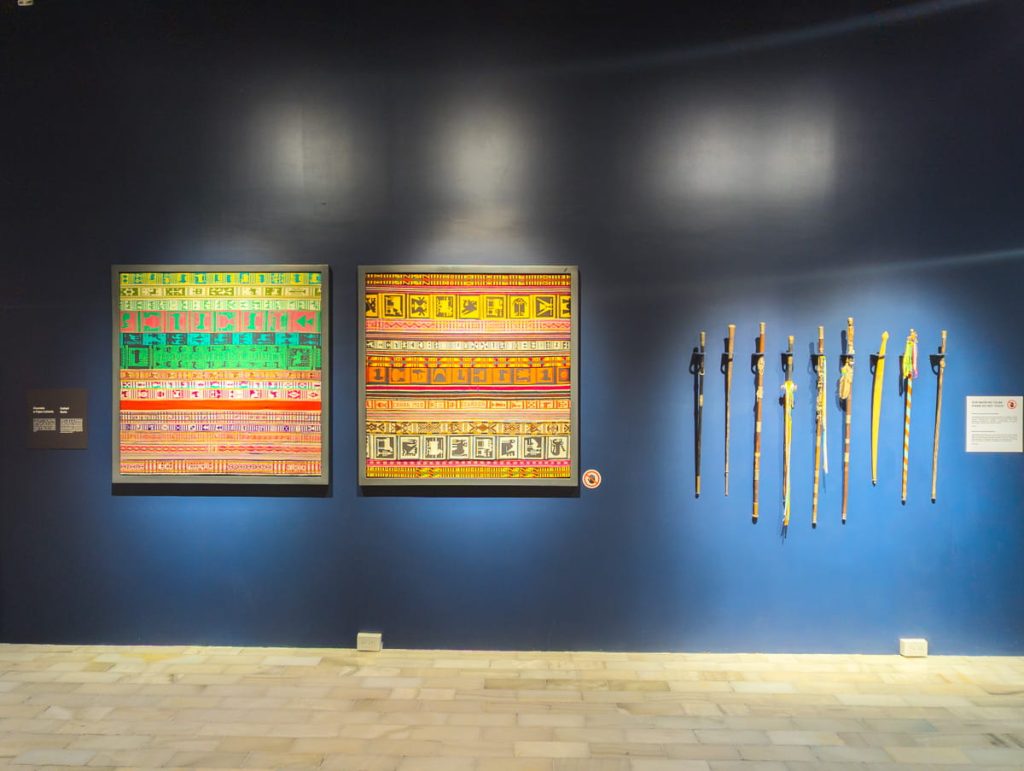
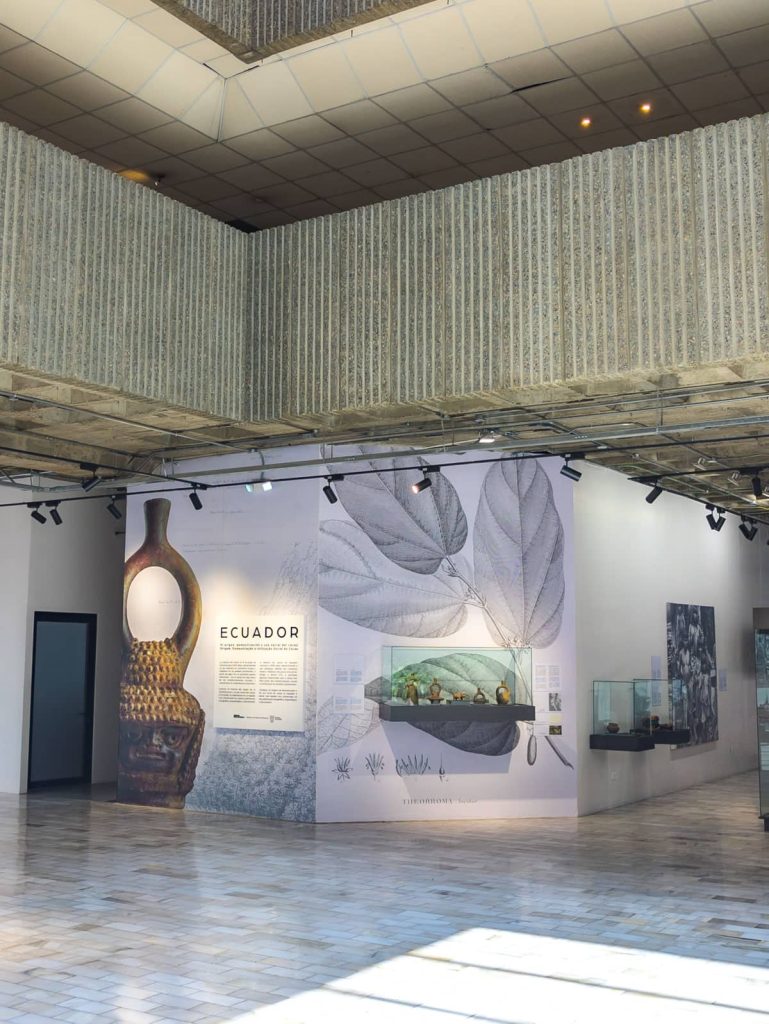
When I was there, one area focused on cacao, another showcased modern art with bold, colorful paintings, and a smaller gallery featured textiles and feather headdresses from the Amazon. The textiles and feather headdresses stood out to me as unique pieces that added something different to the overall museum experience.
You’ll likely pass through the temporary exhibits at the beginning of your visit. They’re a good introduction to the kinds of themes explored throughout the museum.

Museo de la Moneda
Located next to Museo Pumapungo, the Museo de la Moneda stands as its own small museum, both of which are run by Ecuador’s Central Bank. The museum is dedicated to the history of money in Ecuador—from pre-colonial trade systems to the sucre, and on to the adoption of the US dollar in 2000.
You’ll find coins, bills, and machinery displayed in a way that traces the evolution of Ecuadorian currency. I didn’t spend much time here since my friend wasn’t particularly interested, but if you’re into economic history or just enjoy seeing how currency has evolved, it’s a solid addition that is also free to enter.
Note – I believe this exhibit used to be located in the basement level of the Pumapungo Museum. When we went down to the basement, there wasn’t much to see and we quickly came back up. But the museum may develop it into more of an exhibit in the future.
How to Visit the Pumapungo Museum in Cuenca
Before we get into the other areas including the Pumapungo ruins, let’s detail how to visit. Entrance to Museo Pumapungo is free, as is many of the best museums in Cuenca.
The museum and ruins are located just a short walk or drive from the city center (map). Plan to spend at least two hours here to explore both the indoor collections and the outdoor areas, but you could easily spend longer if you take your time.
Pumapungo Ruins
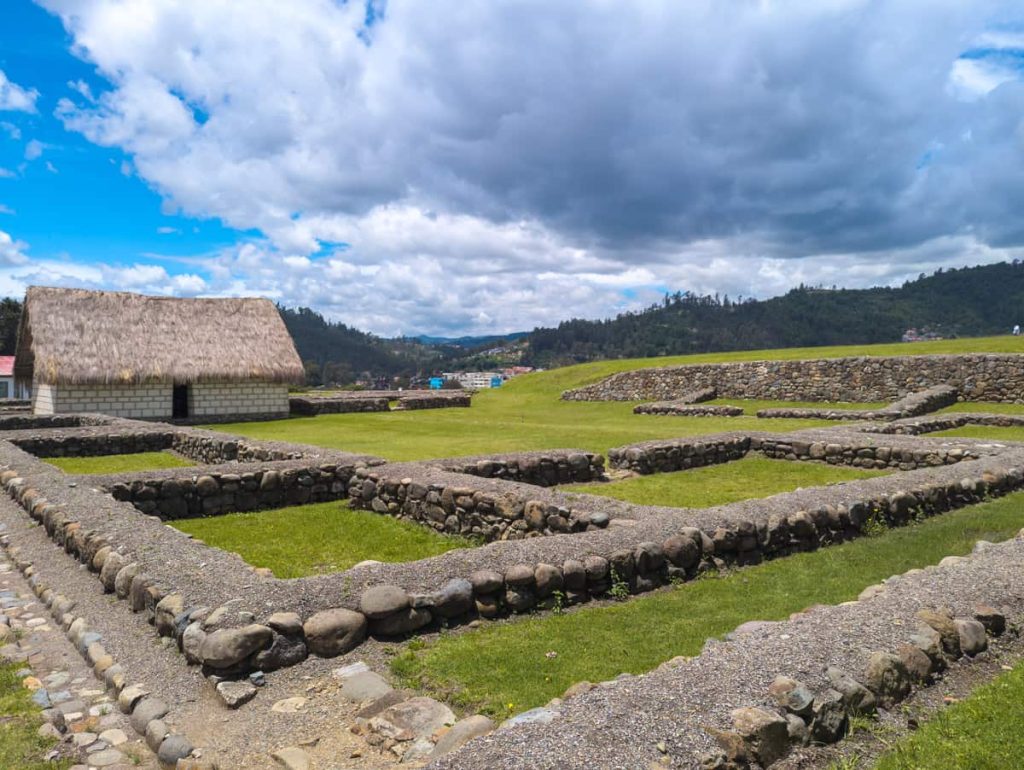
When I first stepped outside to see the Pumapungo ruins, I was underwhelmed. But as we made our way down the hill and looked back, the site took shape. From that lower vantage point the terraced fields come into view, giving a new perspective to this ancient site.
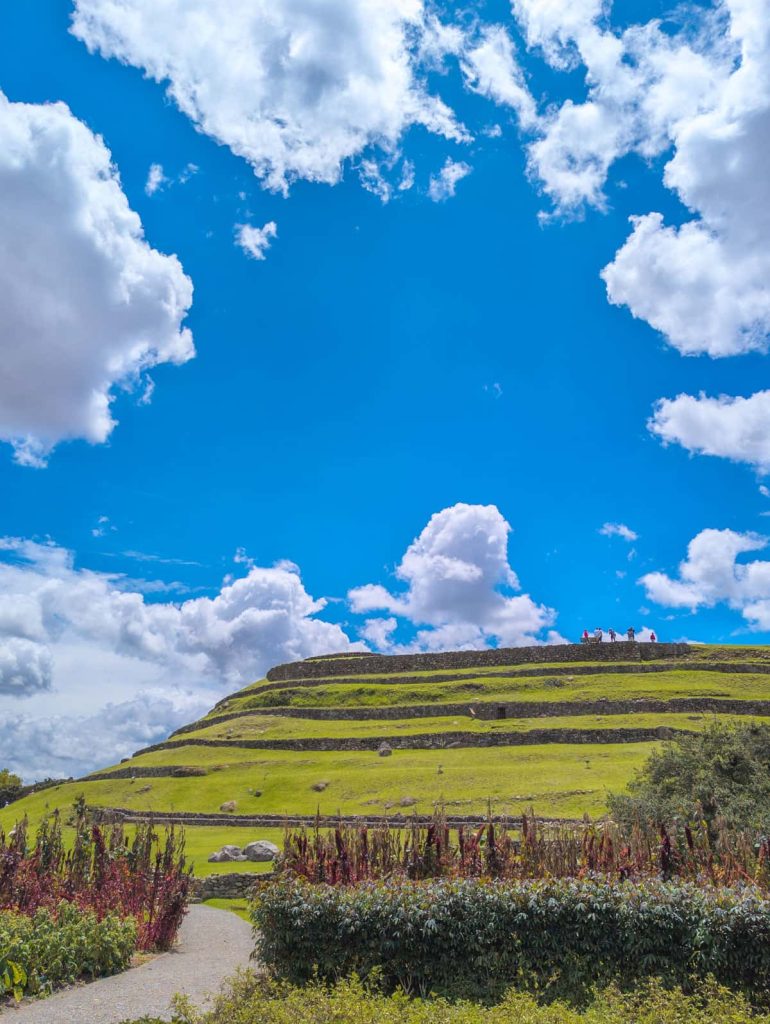
These are the remains of Tomebamba, once a major Inca administrative and ceremonial center built over an older city of the Cañari people. Most of the original structures were destroyed, but you can still see stone foundations, irrigation channels, and the remains of what’s believed to be a temple complex.
It’s not the most visually striking site at first glance, but it takes on more importance when you realize you’re walking through what was once one of the most influential cities in the northern Inca Empire.
Azuaya Farm and Llamas
People often call this part of the Pumapungo site a botanical garden, but the official name, Azuaya Farm, feels more accurate. This terraced hillside once formed part of the agricultural zone of the Inca city, and today it’s planted with crops that have been grown in the Andes for centuries.

The first thing that caught my eye was the tall red amaranth. Then I saw the llamas grazing near the terraces, a reminder that this space isn’t just for show but a working reconstruction of how the Inca once used the land.
It’s not overly landscaped, and a few simple walkways let you explore the terraces at your own pace. If you’re already visiting the ruins, the farm is a natural extension that gives context to how the land was used.
Bird Sanctuary
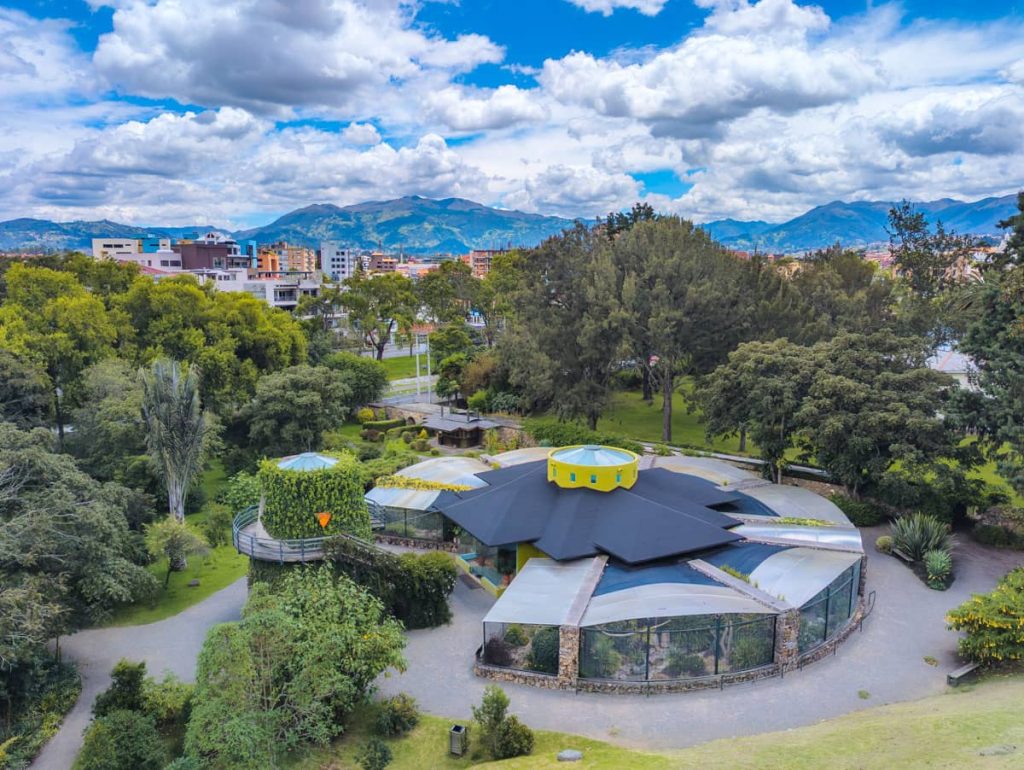
At the far end of the Pumapungo grounds is a bird rescue center that houses species from across Ecuador. Sadly, many of the birds here were rescued from captivity.
I lingered here longer than expected, mesmerized by the bursts of color from macaws, parrots, and other tropical birds. It’s a striking contrast to the quiet ruins and farm terraces, and a reminder of the incredible biodiversity that Ecuador is working to protect.
Wrapping Up Your Visit to Museo Pumapungo
Visiting the Pumapungo museum in Cuenca takes you on a journey across Ecuador’s cultures, history, and traditions. From the ethnographic rooms and archaeological displays to the Pumapungo ruins, terraces, and bird sanctuary, each area adds another layer of meaning to the museum.
What begins as a museum visit quickly becomes an exploration of how people have lived, celebrated, and connected with the land here for centuries. It’s a reminder that Cuenca isn’t only about colonial charm but also about preserving and sharing the diverse stories that continue to shape Ecuador today.