
19 Ecuadorian Street Foods and Snacks You Should Try

Street food in Ecuador is an essential part of the travel experience. But if you’re not sure what to order, it’s easy to pass by the best local Ecuadorian snacks without even realizing it.
Some items like patacones and fried chicken are familiar. Others, like cevichochos, quimbolitos, and chontacuros are unique to the region.
This guide breaks down the most common Ecuadorian street foods so you can try them with confidence, whether you’re wandering a market in the Andes or exploring the Amazon.
As someone who’s lived in Latin America for the last 10 years (and eaten my fair share of street food), I can tell you these snacks have their own ingenuity that shines through in the flavors.
I’ve put together this list of the foods you’re most likely to encounter (and actually want to try). Whether you’re a curious traveler or a hungry one, this list will help you navigate Ecuador’s street foods like a local.
This article may contain affiliate links. This means if you click a link on my website and make a purchase, I earn a commission at no additional cost to you. For full information, please see my disclaimer here.
1. Cevichochos
Cevichochos is a popular Ecuadorian street food that mimics the flavors of ceviche but swaps seafood for lupini beans, called chochos.
The beans are marinated in lime juice with onions, tomatoes, cilantro, and spices. It has the same bright, tangy flavor as traditional ceviche and a nice texture.
You’ll find cevichocho at street carts throughout, especially in the Sierra. It’s served in a cup or bowl and topped with chifles for crunch. Inexpensive, protein-packed, and full of flavor.
2. Tortillas
I know what you’re thinking: tortillas in South America? But Ecuadorian tortillas are different from what you find in México.
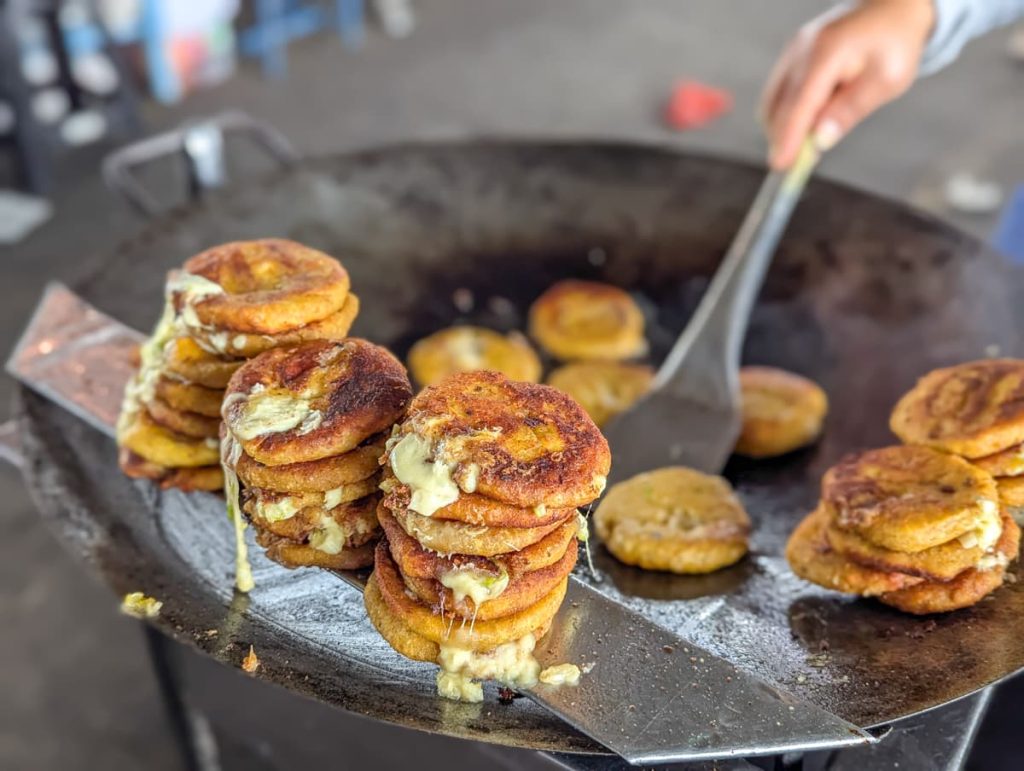
Small thin patties made from corn, potato, yuca, or green plantains (known as tortillas de verde) are stuffed with cheese and cooked until golden and crisp on the outside.
I discovered these while walking through the market in Sasquilla, Ecuador. The tortillas were stacked on the hot griddle with cheese bubbling out the sides. They’re simple, savory, and one of the most satisfying street foods in Ecuador that I ate.
3. Empanadas de Viento

Empanadas de viento are a classic Ecuadorian street food: deep-fried pastries filled with cheese and dusted with sugar. Viento (wind) comes from the airy pocket that forms inside when they’re fried.
You’ll spot them everywhere—from street stalls and markets to vendors at the bus terminal. I was even served one as part of a package when I visited the hot springs near Cuenca. Light, crispy, and slightly sweet, they’re a great sweet and savory snack.
4. Quimbolitos
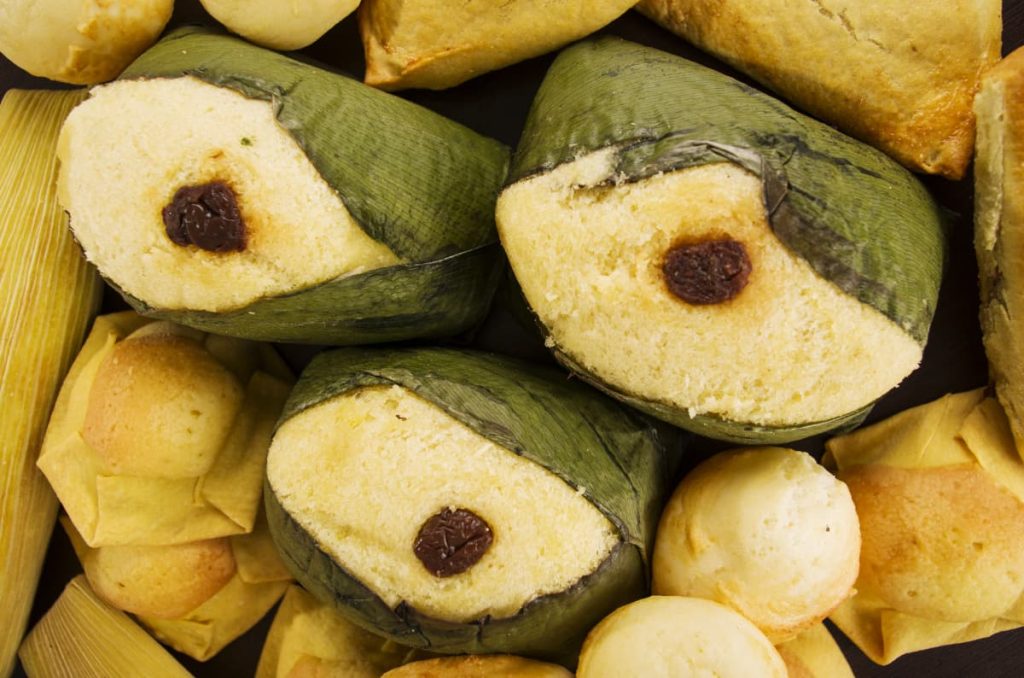
Quimbolitos are light, steamed cakes made with corn flour, eggs, sugar, and a bit of cheese or raisins, depending on the recipe. The batter is poured into achira leaves, folded, and steamed until soft and springy.
They’re easy to miss, but worth seeking out—especially if you’re in a market or bakery that sells traditional Ecuadorian sweets. Quimbolitos are mildly sweet, with a delicate texture that makes them a great snack or light dessert.
Tip – Typically these are gluten free, but some recipes use half corn and half wheat flour (harina de trigo).
5. Huevos de Codorniz
Quail eggs are a popular Ecuadorian street food, typically sold from small carts in the highlands. They’re boiled, served warm, and come with a sprinkle of salt and optional ají salsa. They are simple yet surprisingly satisfying.

The eggs are tiny, about a third the size of chicken eggs, with a slightly richer flavor. Street vendors often sell them in batches of five or ten, making them an easy option while wandering through the streets or a market.
I passed by carts selling these countless times before I finally bought a bag while wandering around the Saquisilí market. My plan was to save them for breakfast the next morning since I had an early wake up call.
That didn’t happen. I ate all 10 before I even got on the bus to leave.
6. Huevitos Chilenos
Despite the name, this snack is not eggs and not from Chile. But these little fried dough balls are one of the most beloved street sweets in Ecuador.
Crispy and golden on the outside, soft and fluffy on the inside. They’re like donut holes, but better.
Made with a simple dough of flour, eggs, sugar, and anise, huevitos chilenos are deep-fried on the spot by street vendors. You’ll usually get them in a paper bag with a generous dusting of sugar, making them easy to snack on while wandering.
7. Chuzos or Pinchos
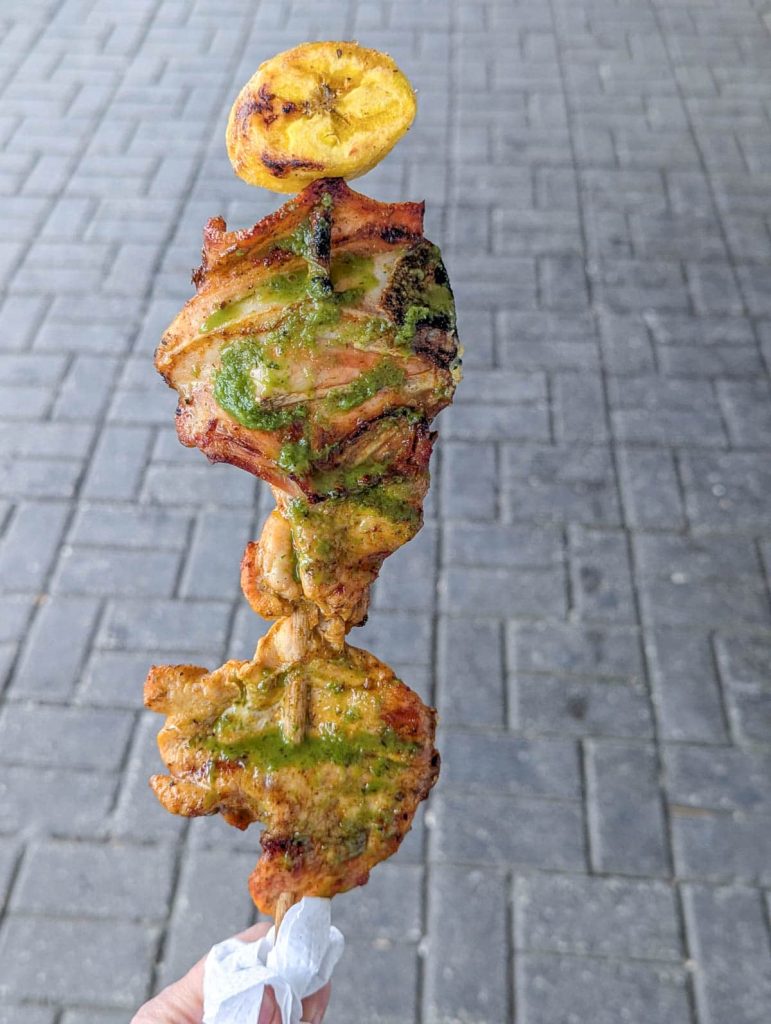
Chuzos (or pinchos de carne) are grilled meat skewers. I first tried one in Alausí, the town known for the Devil’s Nose train, when I was drawn in by the smoky smell of the grill. I didn’t know what they were called, but I knew I wanted a snack.
Protein options include beef, chicken, sausage, or a combo of all three. No matter the meat, there’s always a slice of plantain, lightly caramelized from the grill. Drizzle the skewer with ají salsa and yum!
8. Espumilla
This colorful dessert looks like soft serve except it doesn’t melt. Espumilla is made by whipping egg whites with sugar and fruit puree (usually guava or blackberry) until they hold stiff, fluffy peaks. It’s served in a cone or cup and topped with sprinkles or a drizzle of syrup.
You’ll spot it in plazas and markets, especially in the highlands. I first saw espumilla while exploring Cuenca and had to do a double take—at first glance, it looked like ice cream. It’s a nostalgic treat for many Ecuadorians and one of the most eye-catching sweets you’ll see on the street.
9. Chochos, Chifles and Tostado

You’ll often see these three street snacks sold together. You can mix and match your own combo or ask for them separately.
- Chochos – Protein rich lupini beans with a mild flavor
- Chifles – Thin, crispy plantain chips
- Tostado – Roasted corn kernels (dry, salty, addictive)
A squeeze of lime and a bit of ají brings it all together. Whether you build a mix or stick with one favorite, this is the kind of snack you didn’t know you needed until you eat the whole bag.
10. Humitas
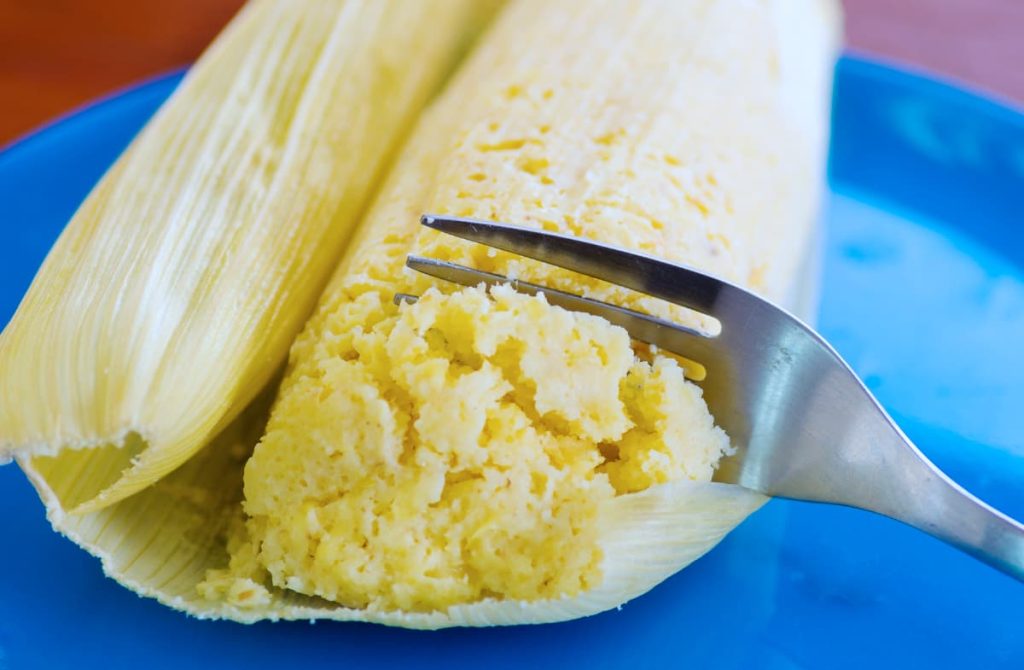
These soft, steamed corn cakes wrapped in corn husks are essentially a type of tamales. They’re a common sight at Ecuador’s street carts, market stalls, and even restaurants since they’re one of the most traditional Ecuadorian foods.
Humitas are made with freshly ground corn, cheese, eggs, and a few aromatics like onion and garlic. The texture is tender and moist, somewhere between a tamal and a souffle, with a subtle sweetness from the fresh corn.
Humitas are a popular snack in Ecuador, especially in the morning or late afternoon. You’ll often see locals eating them with a cup of coffee in the markets and plazas.
11. Pan de Yuca
Pan de yuca is a warm, chewy cheese bread made with yuca flour. These little rolls are naturally gluten-free and often sold from bakery stalls or small cafes.
What makes the experience uniquely Ecuadorian is how they’re often paired. Rather than coffee, a fruity yogurt drink is common as a quick, satisfying snack.
12. Bolones
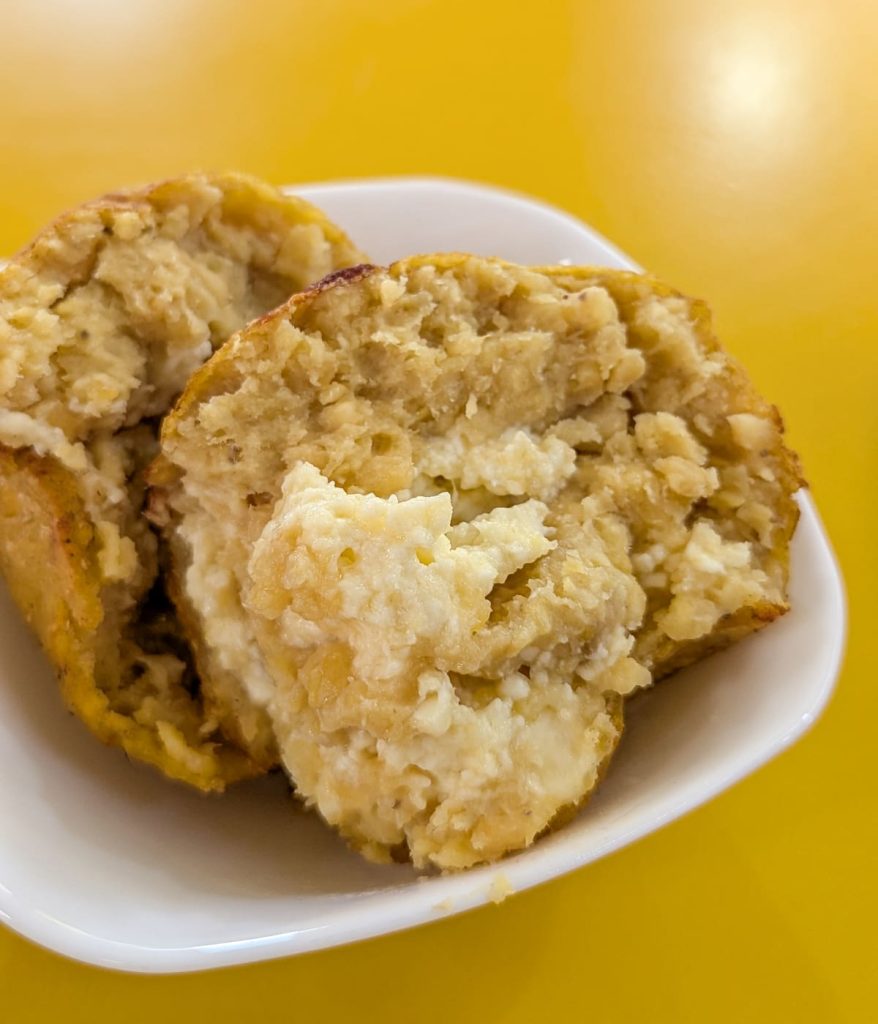
Bolones are hearty, handheld balls of mashed green plantains mixed with cheese, chicharrón, or both. They’re shaped into balls and fried until golden and crispy on the outside.
Dense, savory, and filling, bolones are a classic Ecuadorian breakfast but also make a quick, satisfying snack.
13. Morocho

Morocho is a warm, spiced drink made with cracked corn, milk, sugar, and cinnamon. The corn is simmered until soft, giving the drink a thick texture similar to rice pudding in smoothie form.
You’ll find morocho sold on the street and in markets, especially in the highlands. It’s one of several traditional drinks in Ecuador you’ll come across during your travels, especially if you’re exploring the local markets.
14. Pollo Frito
Fried chicken is wildly popular in Ecuador. When I first arrived in Quito, I was shocked to see so many locations of the chain with the famous colonel.
But it didn’t stop there. I continued to see small street stands selling fried chicken throughout Ecuador. At local stands, pollo frito is often made to order and served with french fries. It’s crunchy, salty, and satisfying.
15. Patacones
Ohhh another crunchy, salty, satisfying Ecuadorian snack, yum!

Patacones are twice-fried green plantains that are crispy on the outside and starchy inside. While not unique to Ecuador, you can find them in street stalls and seafood restaurants, sometimes topped with cheese or accompanied by protein like sausage or shrimp.
16. Fresh Juice
Freshly made juice is available in many places: market stalls, street carts, and restaurants. You’ll usually find a lineup of tropical flavors blended to order, including maracuyá (passion fruit), mora (blackberry), tomate de arbol (tree tomato), and mandarina (mandarin orange).

It was a cold day in the mountains when I grabbed a jugo de mandarina at the Otavalo Market near Quito, but it still hit the spot. It was light and refreshing with the perfect touch of sweetness. I’ve been dreaming about that juice ever since.
17. Grilled Plantains

Just when you thought you’d had enough plantains, Ecuadorians also love the grilled variety. Ripe plantains are peeled and grilled until the outsides are caramelized and the insides turn soft and almost custardy.
The natural sugars intensify with the heat, giving them a deep, sweet flavor. It’s one of the simplest Ecuadorian street foods, yet incredibly satisfying.
18. Chontacuros
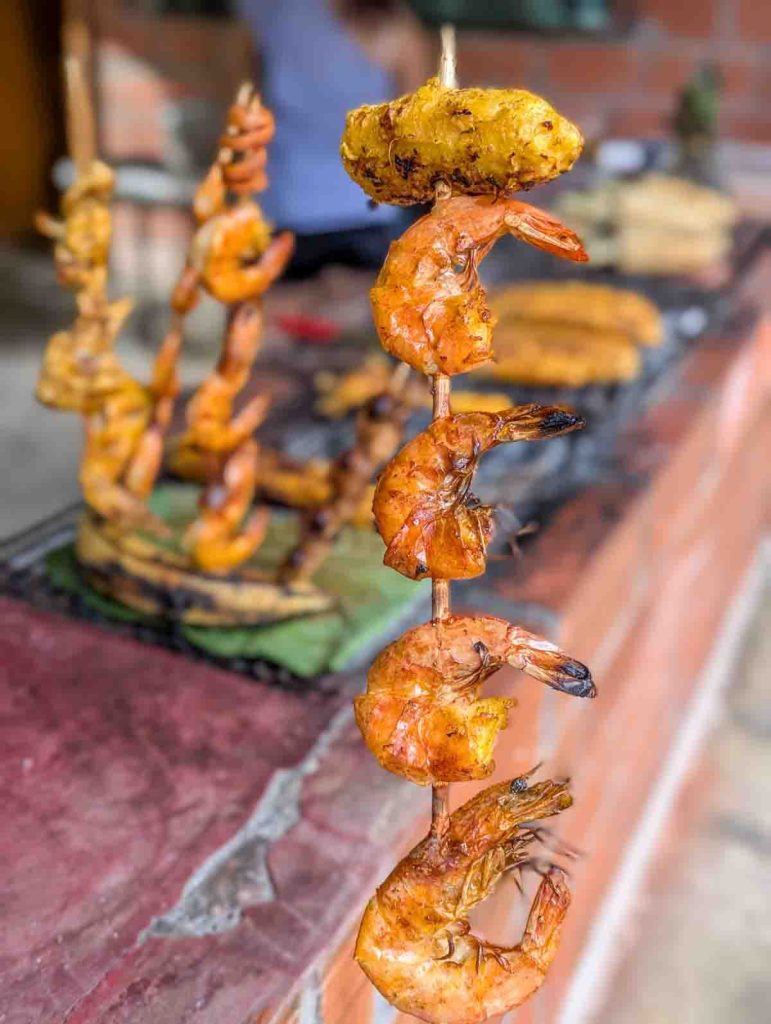
Chontacuros are large white grubs from the Ecuadorian Amazon, traditionally eaten by Indigenous communities as a source of protein. They’re most commonly skewered and roasted over charcoal until the skin crisps and the inside turns soft and fatty, similar in texture to bone marrow.

When my Ecuadorian friend first told me about them, I pictured something small. But it wasn’t until I visited the Amazon that I realized just how fat these grubs are. Living in Oaxaca, I’ve come around to the idea of eating insects, but I found chontacuros a bit intimidating to be honest.
They’re an important part of food culture in the Amazon and worth trying if you’re curious about traditional Ecuadorian snacks beyond the usual.
19. Choclo con Queso
Simple, salty, and satisfying. Choclo con queso is the Ecuadorian version of Mexican street corn. Choclo refers to the large-kerneled Andean corn, which is boiled, grilled, and served hot on the cob.
But instead of mayonnaise and queso fresco, the corn is slathered with a cilantro cheese sauce made with garlic and spices. It’s a quick, affordable snack.
Can you eat street food in Ecuador?
Yes, you can eat street food in Ecuador. I had no issue in the 6 weeks I traveled around the country. Stick to busy stalls with a high turnover, where food is freshly prepared and handled with care. If it looks clean and locals are lining up, it’s usually a good sign it’s safe to eat.
Final Thoughts on Eating Street Food in Ecuador
Ecuadorian street food isn’t only about finding a quick bite. It’s a window into the country’s culture, traditions, and everyday life.
From savory snacks like bolones and chuzos to sweet treats like espumilla, street food in Ecuador is diverse, affordable, and surprisingly satisfying.
Now that you know what to look for, you can taste Ecuador with confidence, curiosity, and a sense of adventure, one street cart at a time.