
15 Unique Foods in Mexico Travelers Miss (and Where to Find Them)

You may have had the thought: Mexican food is just corn masa, beans, and meat reinvented over and over. It’s an easy conclusion to reach after a week of eating tacos, enchiladas, and chilaquiles. But unique food in Mexico is out there. You just need to know what to look for.
Many unique Mexican dishes are tied to a specific region or time of year, which is exactly why travelers miss them. In Oaxaca a red-hot river rock is dropped into a bowl of soup to make it boil. In Guadalajara a sandwich is built to be drowned in chile de árbol sauce. And every fall in La Mixteca region, a mole is made with goat hips after the herds have walked nearly 800 km.
I grew up between Mexico and the States, so most of these are familiar, but a few surprised even me. Here’s what they are and where to find them.
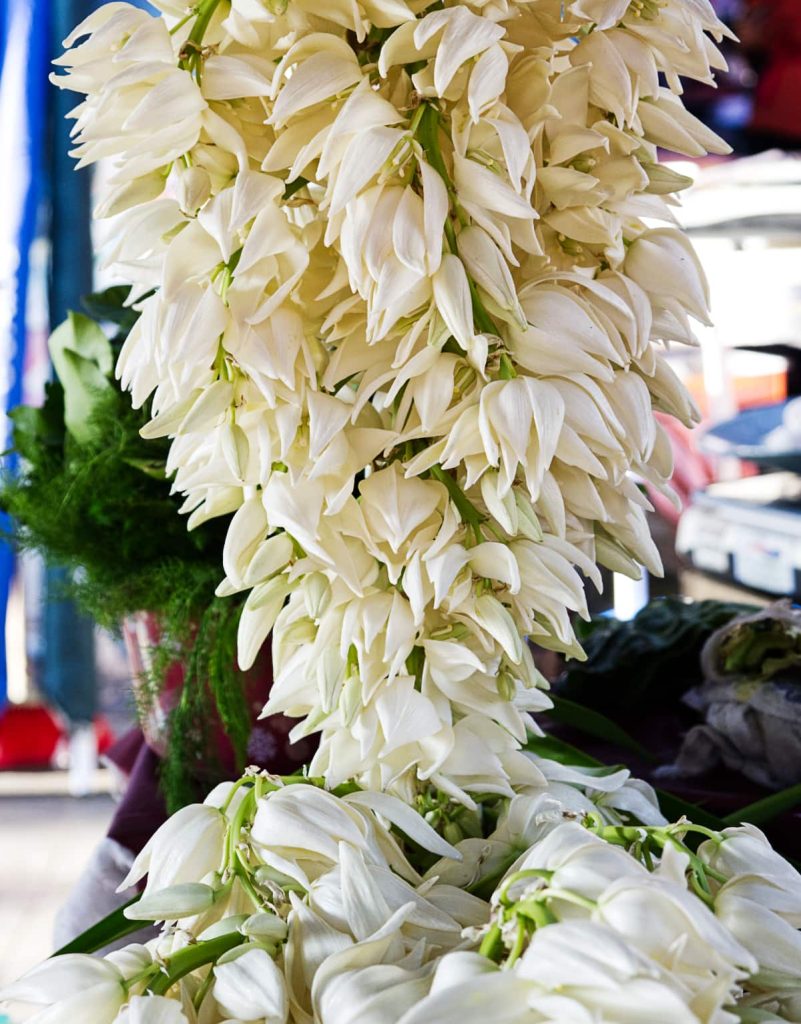
1. Chile en Nogada
Few dishes are as visually and symbolically loaded as chile en nogada. A roasted, green poblano pepper is stuffed with a sweet-savory picadillo (usually ground pork or beef mixed with fruit and spices), blanketed in a creamy white walnut sauce, and finished with a scattering of red pomegranate seeds and parsley.
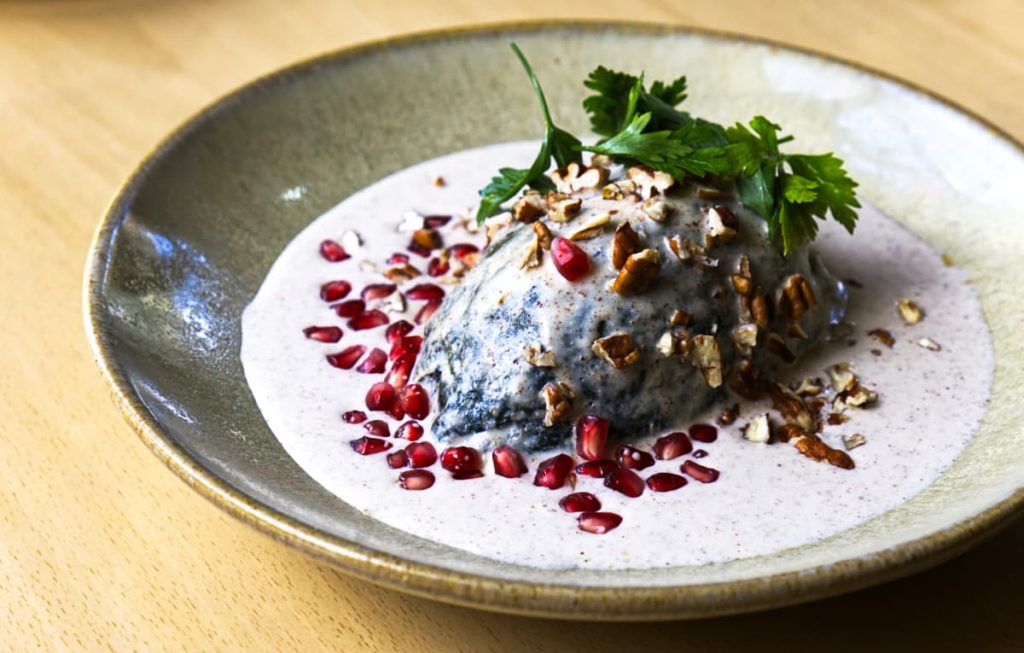
The result is a dish that represents the colors of the Mexican flag. It’s rich, a little sweet, a little savory, and one of the most beloved Mexican dishes.
Every September, around Independence Day, restaurants across Mexico feature chile and nogada on the menu. But if you miss the season, keep your eye out. A handful of restaurants serve it year round, especially in tourist areas.
Did you know? As the legend goes, nuns in Puebla invented the dish in 1821 to honor Mexico’s recent independence and Saint Agustín de Iturbide.
2. Caldo de Piedra
Like many unique Mexican dishes, caldo de piedra has its origins in indigenous cuisine, specifically the Chinantec of San Felipe Usila, Oaxaca. What makes it distinct is the cooking method: red-hot river rocks, dropped straight into the soup.
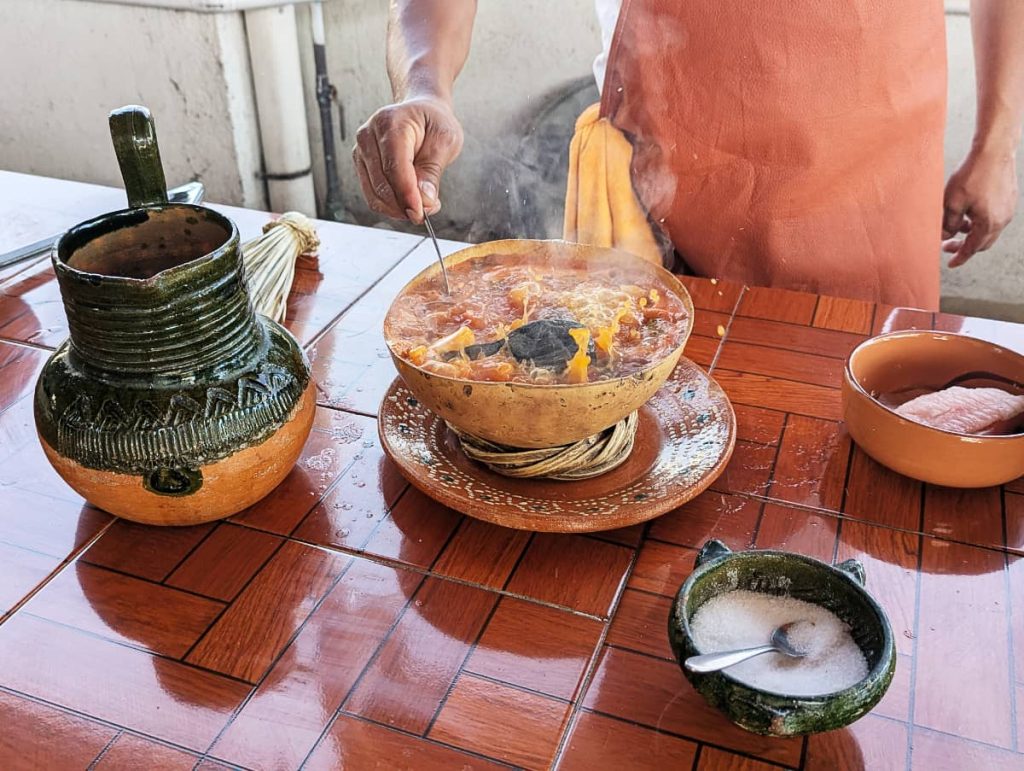
The soup uses the day’s catch from the river (usually fish) and is served in a jícara, a hollow gourd bowl once used as an everyday eating and drinking vessel.
The rock hits the bowl and the broth answers immediately: a hiss of steam, then a hard boil as it cooks right at your table.
Historically it’s prepared by the men of the community because they were the ones out fishing. Over time, that practical arrangement took on more meaning. The dish is often described today as a way for men to honor the women of the community, a gesture of gratitude passed down alongside the recipe itself.
3. Barbacoa de Borrego
A whole lamb is butchered, seasoned, and wrapped in maguey leaves. It’s slow-cooked using hot rocks in an underground pit until it’s so tender it falls apart.
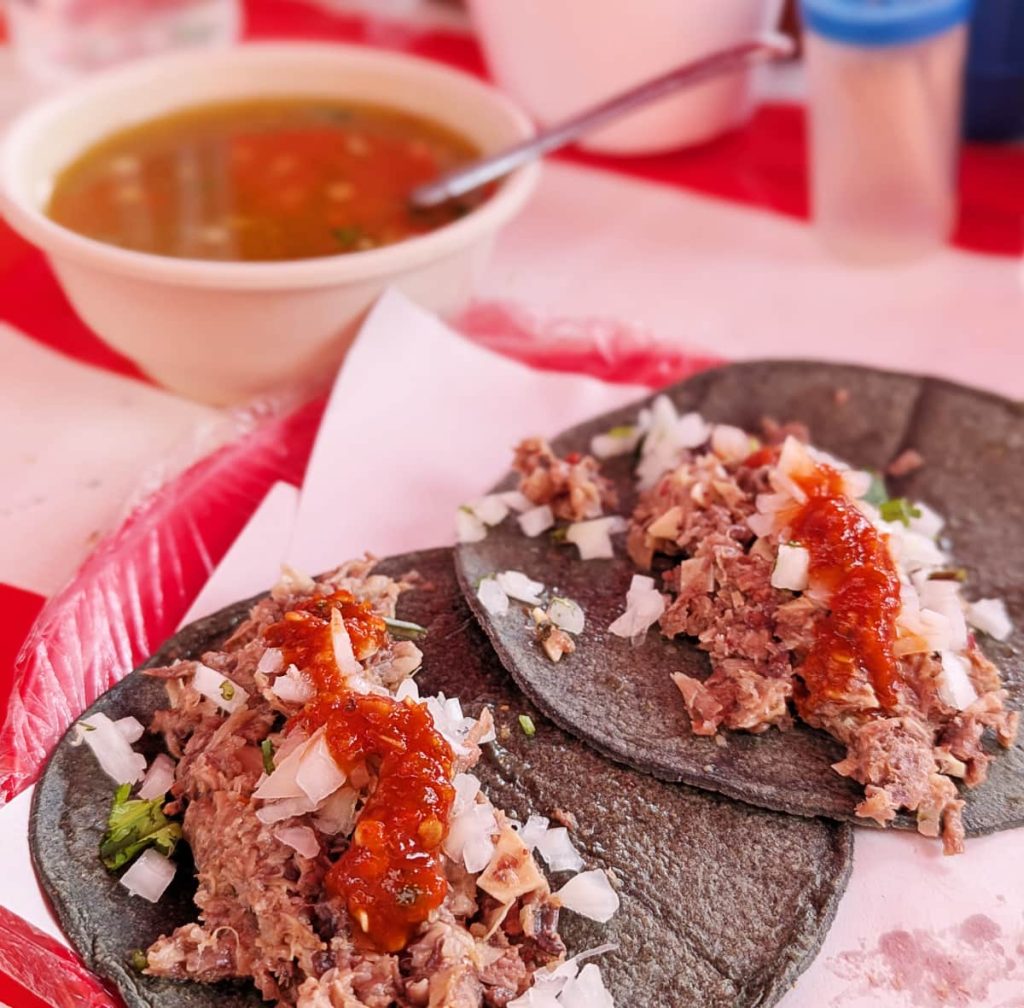
Barbacoa de borrego is a typical breakfast in Mexico on the weekends. It’s eaten with a stack of fresh tortillas, salsa, and a bowl of the rich consomé, a broth made from the meat’s drippings and simmered with garbanzos, rice, and/or organ meat and skin.
If you want to try this dish, check out our favorite places to eat barbacoa in Mexico City.
Did you know? Because lamb didn’t exist in the Americas before colonization; this dish was cooked using native meats like venison, turkey or tepezcuintle (a lowland rodent). It’s one of the clearest examples of how Mexico’s culinary history adapted without losing its methods.
4. Aguachile
Think of aguachile as ceviche’s spicy cousin.
This dish originated in the sierra of Sinaloa where it was first made with dried meat, boiling water and chiltepin chile, hence the name which means chili water.
As aguachile became more popular and moved from the mountains to the coast, shrimp replaced dried meat and lime replaced boiling water.

The result? A bright green, spicy, and lime-forward seafood dish that’s become a favorite beyond Sinaloa.
While aguachile verde is the traditional version Made with fresh green chilies,red and black aguachile swap in dried chilies and darker, smokier ingredients for their own distinct flavor profiles.
5. Relleno Negro
Relleno negro is a Yucatán specialty built around recado negro, a paste made by charring dried chiles until they’re nearly burnt, then grinding them with garlic, spices, and sour orange. That char is what gives the dish its striking black color and smoky depth.
To make this unique dish, turkey simmers directly in the broth alongside a but (pronounced “boot”), a large meatball of ground pork and hard boiled egg. It’s traditionally made in November for Hanal Pixán, the Maya tradition behind Day of the Dead.
6. Mole de Caderas
Mole de caderas, also known as guaxmole or huaxmole, is made from the hips (caderas) of goats which are simmered in a brothy mole made with chiles and guaje seeds. Exactly where this dish comes from is still debated.
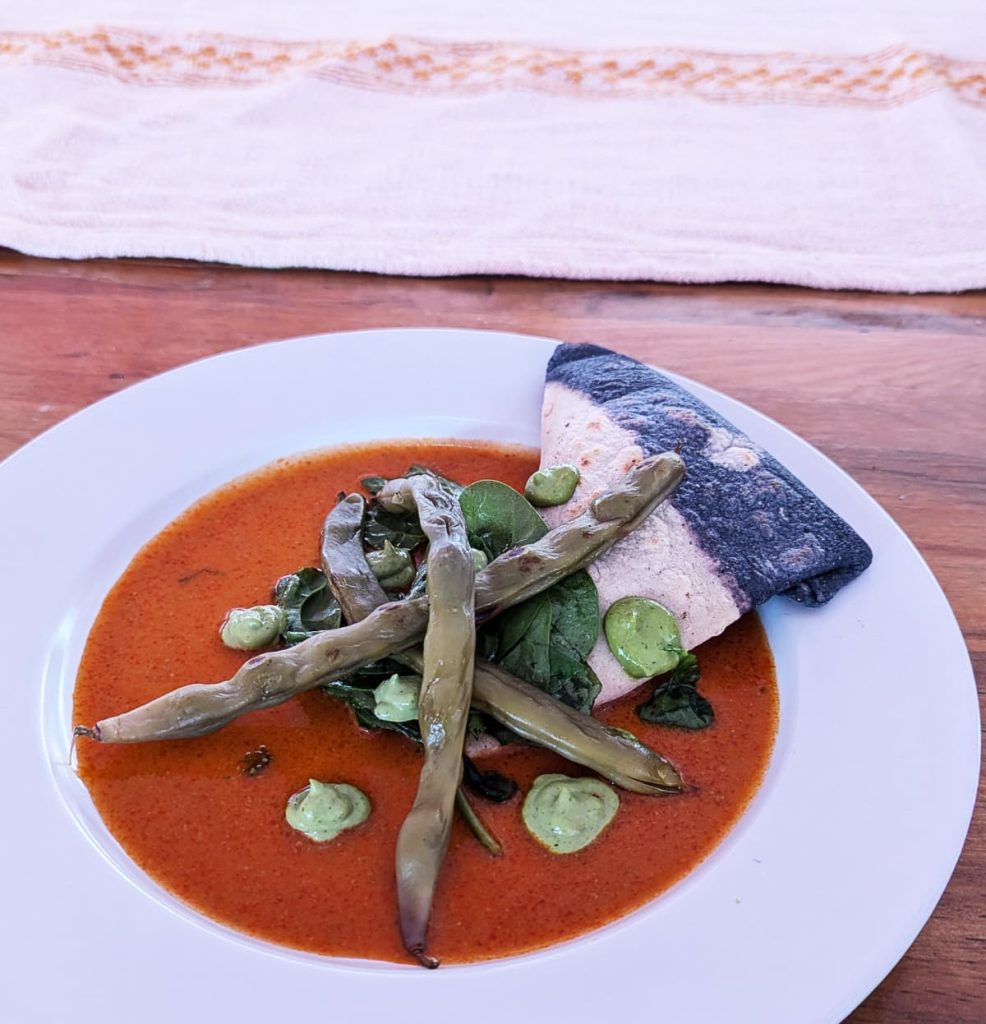
Both Tehuacán in Puebla and Huajuapan de León in Oaxaca claim it. And both are right. Mole de caderas originated in La Mixteca, a cultural region that stretches across what’s now Oaxaca, Puebla, and Guerrero.
When Oaxaca City recently announced a mole de caderas food festival, it caught a lot of locals off guard. Many had never heard of this unique food that, just a few hours north, had been a seasonal ritual for generations.
The season for this unique dish lines up with the slaughter, which runs from early October through mid-November.
Fun Fact – Its origins trace back to the 16th century, when Dominican friars introduced goat herding to the region. Every year, herders walk their goats nearly 800 km across La Mixteca in a seasonal migration. As the goats graze across the changing terrain, the meat takes on a distinct flavor.
7. Nopal Cactus
Who looks at an uncooked prickly cactus growing out of the ground and thinks it looks appetizing. Our ancestors did and thank goodness for that. Their instinct turned into a staple in Mexican kitchens.
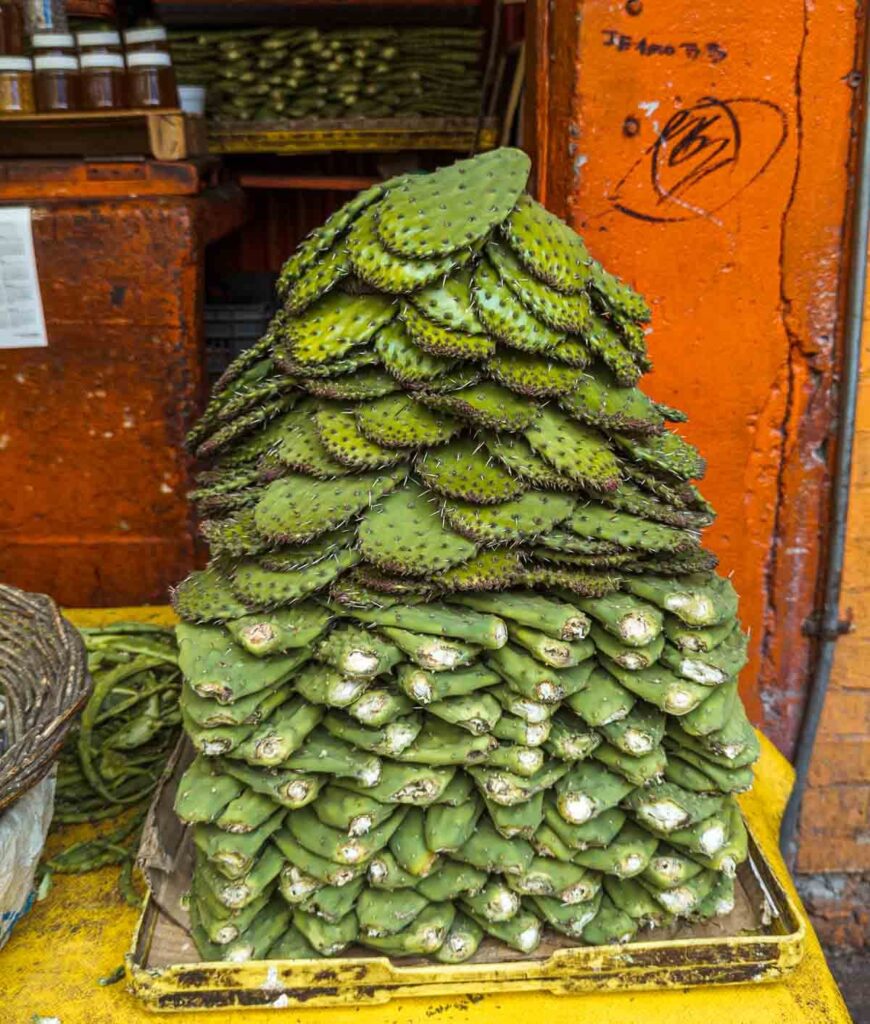
The flavor is similar to green beans, but with a touch of acidity, and a texture that goes from crisp to slimy depending on the preparation. You’ll find it served with tacos, gorditas, and sopes, in beans, scrambled with eggs, eaten as a side salad with red onion and tomatoes, or in a variety of other ways.
In the region near Bernal Querétaro, a small town with a giant stone monolith, this common ingredient is used in a different way to create one of the more unique foods in Mexico.
Nopal en penca is a large cactus pad stuffed with poblano peppers, chopped nopales, and potatoes, then grilled until everything cooks through. It traces back to the Otomi people, who first used the pad itself as a natural cooking vessel in the fields.
Did you know? Other countries grow nopal too but almost entirely for its fruit, not the pad. One study found 96% of Mexicans surveyed said they eat nopal, compared to 0% of Brazilians.
8. Edible Flowers
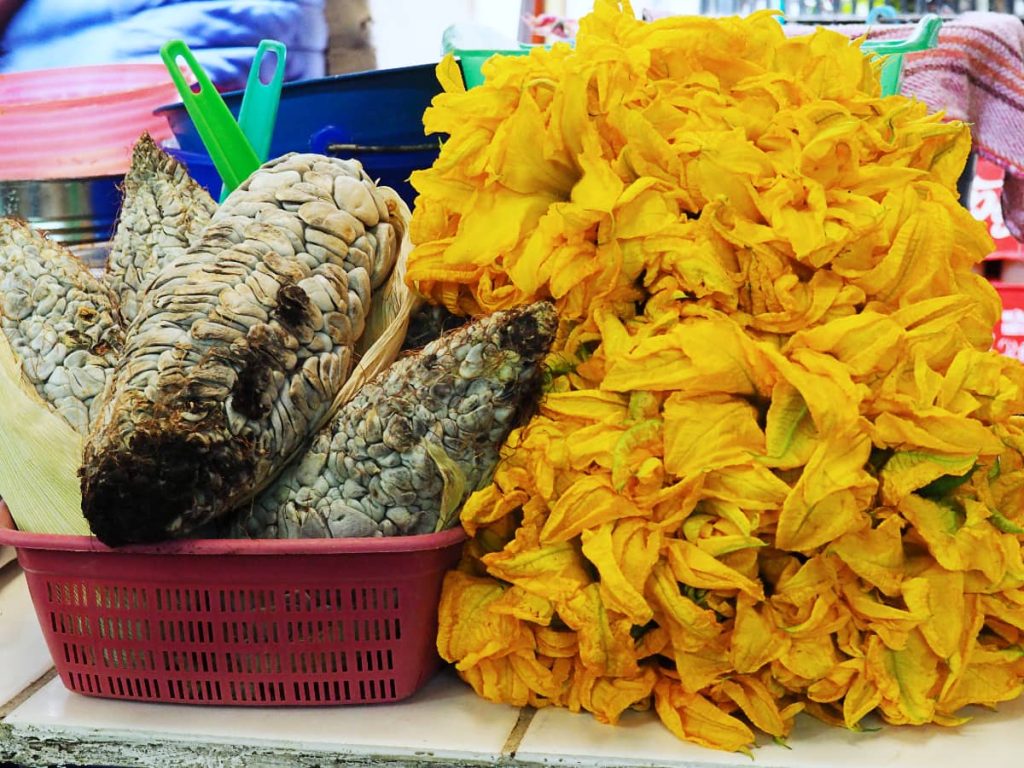
Like insects, flowers are one of those ingredients that sound more unusual on paper than they taste on the plate. They’re usually folded into something familiar like a quesadilla or soup rather than served as the star. A few worth knowing:
- Flor de calabaza: Squash Blossoms are the most widely available of the three, usually stuffed into quesadillas or made in soups.
- Flor de maguey and quiotes: Herbal, earthy, and a touch bitter, usually served in fritters or scrambled with eggs.
- Flor de Jamaica: citrusy and fruity, it’s commonly used to make aguas fresca, but in some regions it’s also tucked into tacos or quesadillas.
9. Sopa de Guías
Another Oaxacan specialty, sopa de guías, takes the parts of the squash plant most people throw away: tender vines and leaves, and turns them into a light, herby soup.
A few things typically go into the pot:
- Guías: The tender young shoots and leaves of the squash plant.
- Flor de calabaza: Squash blossoms, added for texture and a mild sweetness.
- Elote: fresh corn for texture
The traditional recipe is vegetarian. And sometimes sopa de guías includes chochoyotes, small dumplings made from corn masa (dough).
Today it’s also common to be served with a piece of tasajo, a thin salted beef that’s a staple in Oaxaca. It comes on a large thin tortilla, crisped with lard, and topped with queso fresco.
10. Quelites
Wild, forage greens called quelites have long been a part of indigenous food traditions.
A few of the most common:
- Verdolagas (purslane): a succulent that’s slightly tangy and juicy, often cooked with pork in a green tomatillo sauce.
- Quintoniles: a leafy amaranth green, similar in use to spinach.
- Huazontle: Resembling a stalk of broccoli, often battered and fried, then simmered in red sauce or mole.
- Papalo: A strong, punchy herb usually eaten raw with cemitas poblanas.
- Romeritos: tender and slightly salty, especially popular around Christmas in Mexico.
These 5 are only a fraction of the quelites out there. Researchers count somewhere between 300 and 500 types, but many have quietly disappeared from the table. Some estimates put the loss in the variety of quelites consumed in Mexico at 55 to 90% over the last 500 years.
11. Tortas Ahogadas
A sandwich drowned (ahogada) in chili sauce sounds like a mess. But birote salado, the bread underneath, was practically built for this. It’s dense and crackly, with a crust that holds up even after it’s covered in sauce.
Guadalajara, one of the [best cities to visit in Mexico], is the birthplace of tortas ahogadas. It consists of hard bread dipped in either a spicy chile de arbol sauce, or a milder tomato sauce.
It’s then stuffed with pork carnitas and curtidos, tangy pickled onions. .
12. Piedrazo
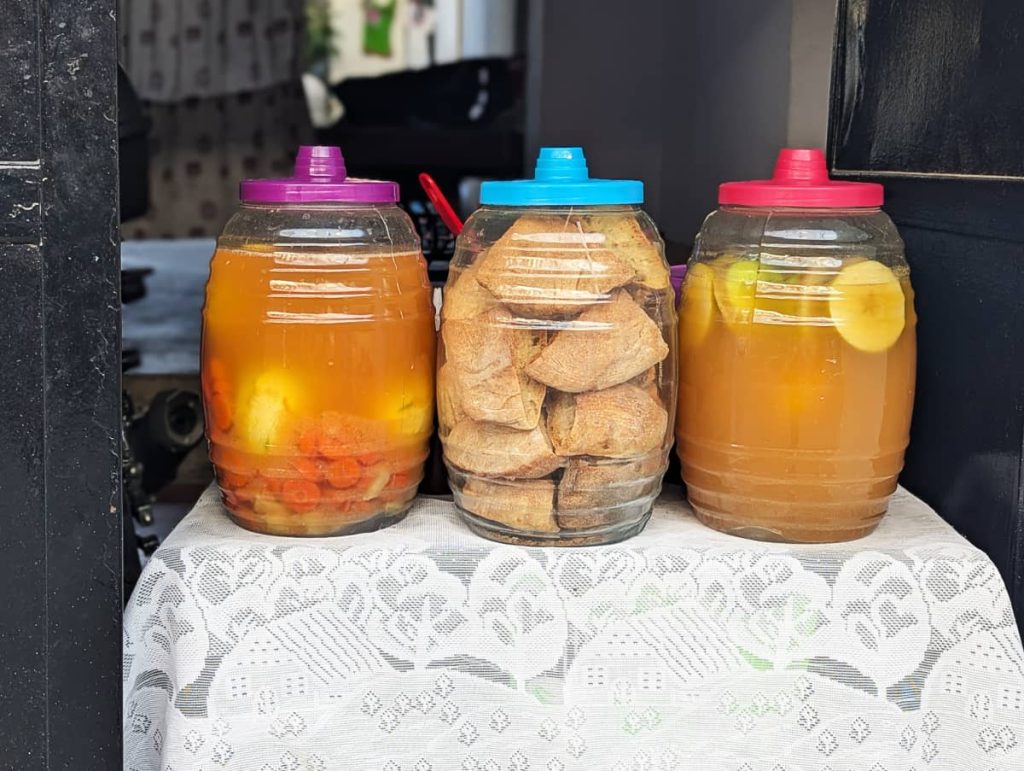
Piedrazo, named for the rock hard bread that is the backbone of this street snack, started with unsold stale bread. Rather than waste it, they soaked the bread in pineapple vinegar and covered it in savory curtidos, chilis, and quesillo, a stringy cheese from Oaxaca.
Despite the name (piedra means rock), it’s more appealing than it sounds: the bread softens as it soaks while still holding its shape under all the toppings.
This unusual snack makes use of low-cost ingredients for a quick bite that was traditionally sold in front of schools. It’s a love it or hate it kind of thing. The sour bite of the vinegar isn’t for everyone, but the Oaxacans who grew up on it tend to crave it for life.
13. Tlacoyos
Tlacoyos are an indigenous food made of corn masa, stuffed with a variety of fillings: black beans, fava beans, chicharrón, or requesón (a cheese similar to ricotta). They’re then shaped into a thick oval and rolled flat before hitting the comal.

The result looks something like a fat, football-shaped tortilla crisped on the outside while the filling stays soft and warm inside. They’re topped with nopales, cheese, and a drizzle of crema or salsa.
Vendors started selling tlacoyos centuries ago in Tlatelolco, once one of the largest markets in the Americas, in the heart of what’s now Mexico City. Today they’re a staple street food in CDMX and in central Mexico.
They’re also a great option if you’re looking for [vegan food in Mexico City]. Order one without cheese or crema and what’s left is a filling, protein-rich snack.
14. Chongos Zamoranos
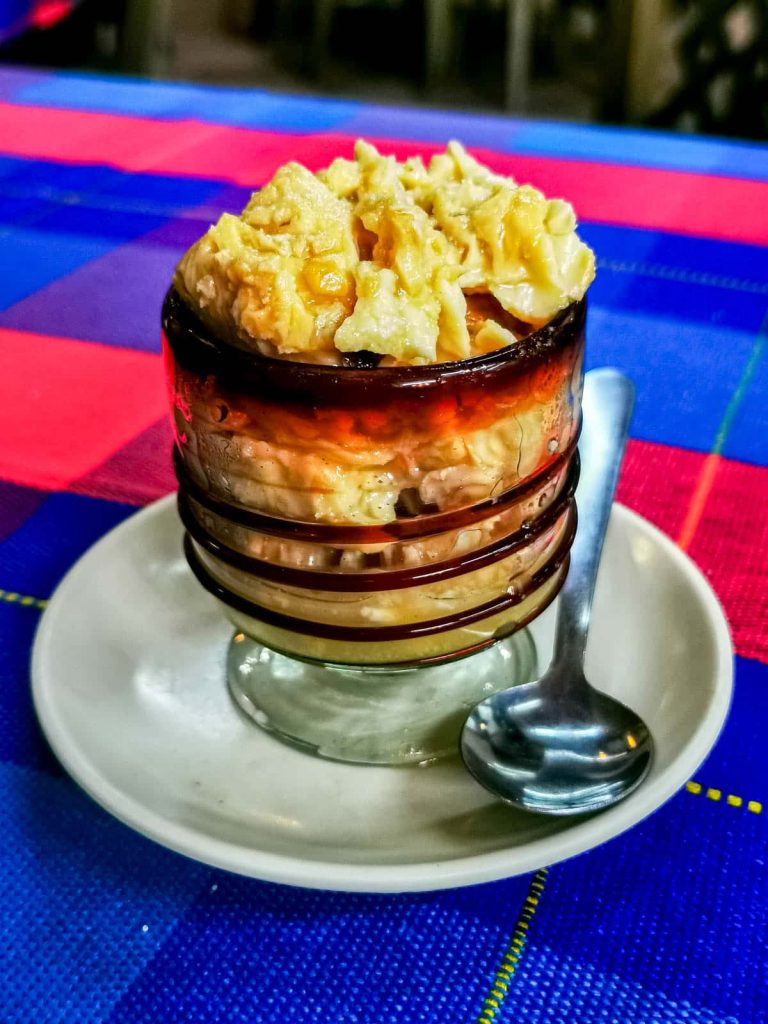
A dessert with deep roots in the broader world of Michoacán cuisine, chongos zamoranos are curdled milk custards, cut into rustic chunks and simmered slowly in a cinnamon-spiced syrup until they take on a firm, slightly chewy texture. The name comes from the Spanish word for a hair bun (chongo), since the curdled milk twists into little knots as it cooks.
They originated in Zamora, Michoacán. Most Travelers who make it to Zamora are there for one reason: Lago de Camécuaro, a spring-fed lake just outside of the city.
15. Pulque
Pulque is one of Mexico’s oldest alcoholic drinks, made by fermenting the sap of the maguey plant.
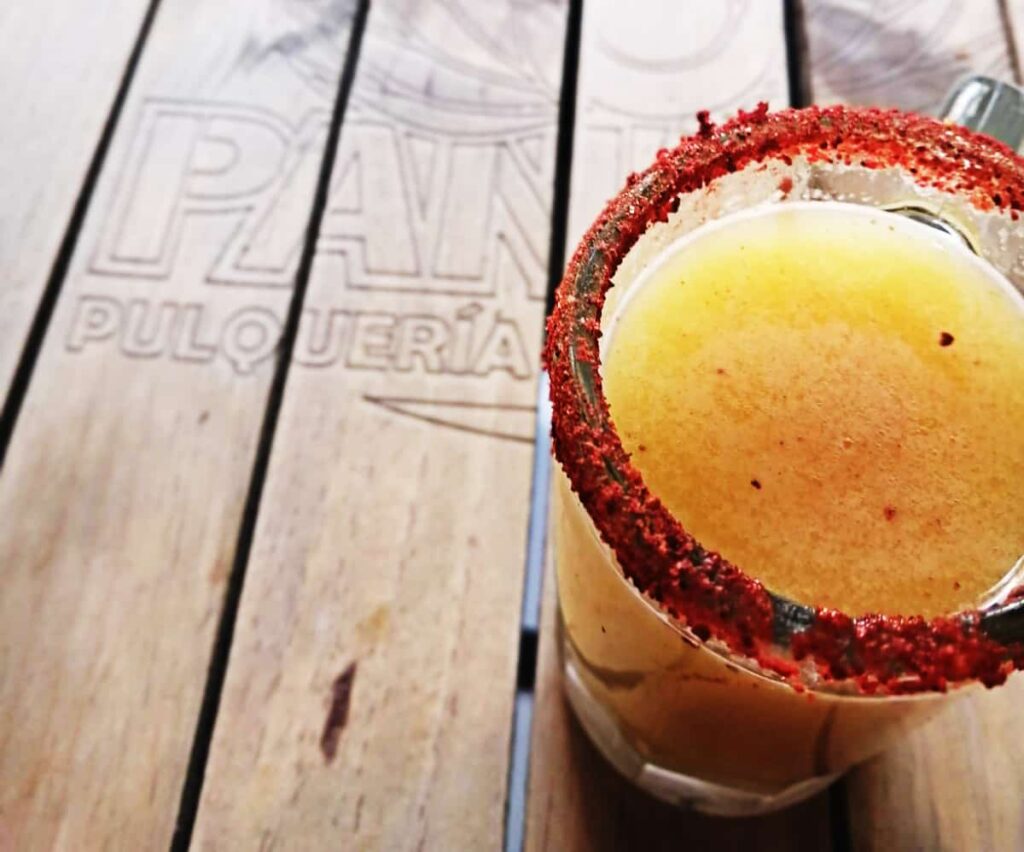
It’s tangy, viscous, and the snot-like texture is an acquired taste. These days it’s often served as a curado which blends the pulque with fruit, oats, or other flavorings to softens the taste and texture. You’ll find it at pulquerías, bars dedicated specifically to this unique drink.
Archaeologists have traced pulque back to Teotihuacan archeological site, nearly 2000 years ago, based on the ceramic jars and stone tools used to scrape the maguey for its sap. It’s a drink that Aztecs considered sacred, reserved for priests and nobility. It remains one of the most traditional drinks in Mexico.
What foods are unique to Mexico?
Foods unique to Mexico include regional specialties rarely found elsewhere, like caldo de piedra (stone-cooked soup from Oaxaca), relleno negro (a black turkey stew from the Yucatán), and mole de caderas (a seasonal goat dish from the Mixteca region). These dishes reflect Mexico’s deep regional diversity, tied to specific indigenous communities that many tourists never come across..
Wrapping Up Unique Mexican Dishes
These unique foods of Mexico don’t even scratch the surface of every peculiar (and delicious) regional delicacy. There’s stone-cooked soup in Oaxaca, a sandwich built to survive being drowned in chili sauce, and a dozen more dishes most visitors have never heard of.
Mexican food was never just corn masa, beans, and meat in different presentations, you just needed to look a little closer.