
Local Guide to Mexican Street Food: Tortas, Tlacoyos, and More

Eating at a street stand in Mexico is one of the quickest ways to fall in love with its food culture. But Mexican street food is more than tacos, tamales, and elotes.
Beyond the familiar, there’s an entire world of authentic Mexican street snacks that are just as easy to find if you know what to look for. We’re talking huaraches, tlacoyos, panuchos, memelas, gorditas, molotes, raspados, and more.
Consider this your map to all of it. You’ll recognize a few favorites and discover some new ones that you’ll wish you’d found sooner. Ready to open your world to eating street food in Mexico like a local?
This article may contain affiliate links. This means if you click a link on my website and make a purchase, I earn a commission at no additional cost to you. For full information, please see my disclaimer here.
Savory Street Food
The backbone of Mexican street food is undeniably savory. These snacks are anchored by freshly pressed masa (corn dough), slow-simmered meats, aromatic herbs, and bright, fiery salsas.
1. Gorditas

Gorditas are thick, round pockets made from corn masa (or wheat flour in northern regions). They are cooked on a flat top grill or fried in oil until lightly crisped.
While still hot, the cook cuts open a slit along the edge to create a pocket and fills it with savory cooked meats or stews and toppings like cilantro, raw onion, cream and cheese. Gorditas are a popular street food in central Mexico, especially near Querétaro and San Miguel de Allende.
2. Tlacoyos
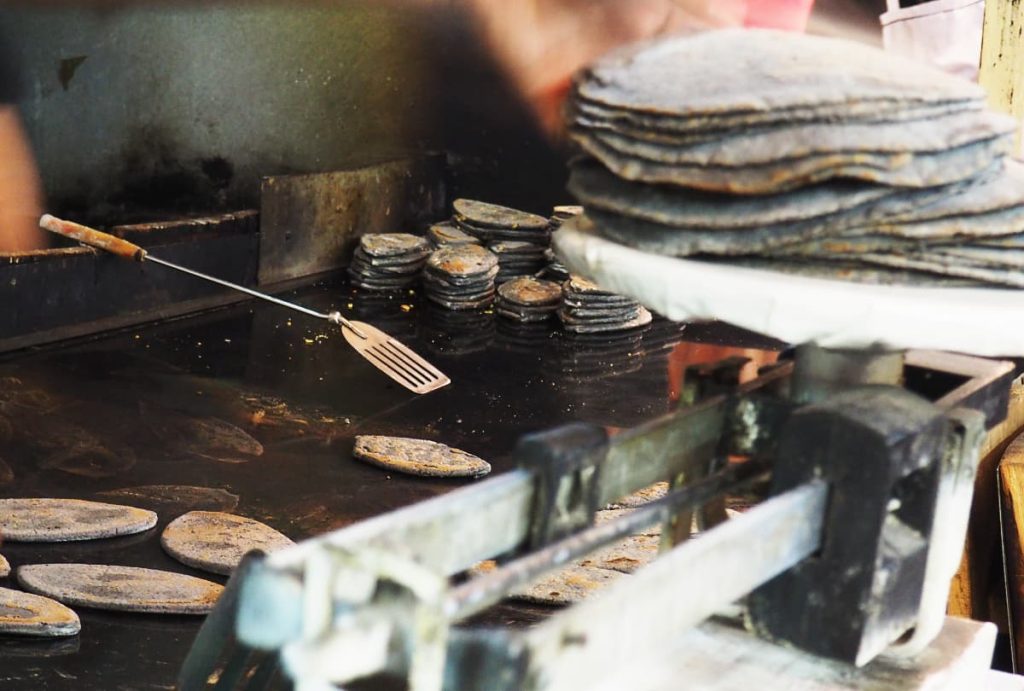
A pre-Hispanic street snack, tlacoyos are a thick, football-shaped oval of corn masa, often blue, stuffed with options like beans, favas, alverjón (a type of pea), and requesón (a ricotta-like cheese).

They are cooked on a comal (round griddle) and topped with a nopal cactus, onion, cilantro, shredded cheese, and cream. If you ask for them without the dairy, they become a great vegan option. The easiest place to find tlacoyos are at the street stalls and markets in Mexico City, though they are sold elsewhere in central Mexico as well.
History Bite – After reading Spanish accounts from the 1500s describing them in the markets, a historian at the culinary school of Mexico joked that tlacoyos are the first fast food of the Americas.
3. Huaraches
Huaraches take their name from the traditional leather sandal they resemble in size and shape, thankfully not in texture. Corn masa is pressed around a center of mashed beans before rolling it into a long flat oval, placed on a comal, and lightly fried until crisp. It’s then smothered in green or red salsa and topped with diced onions, crumbled cheese, and grilled meats like costillas (ribs), cecina (thin pork), and carne asada (grilled beef).
4. Tacos
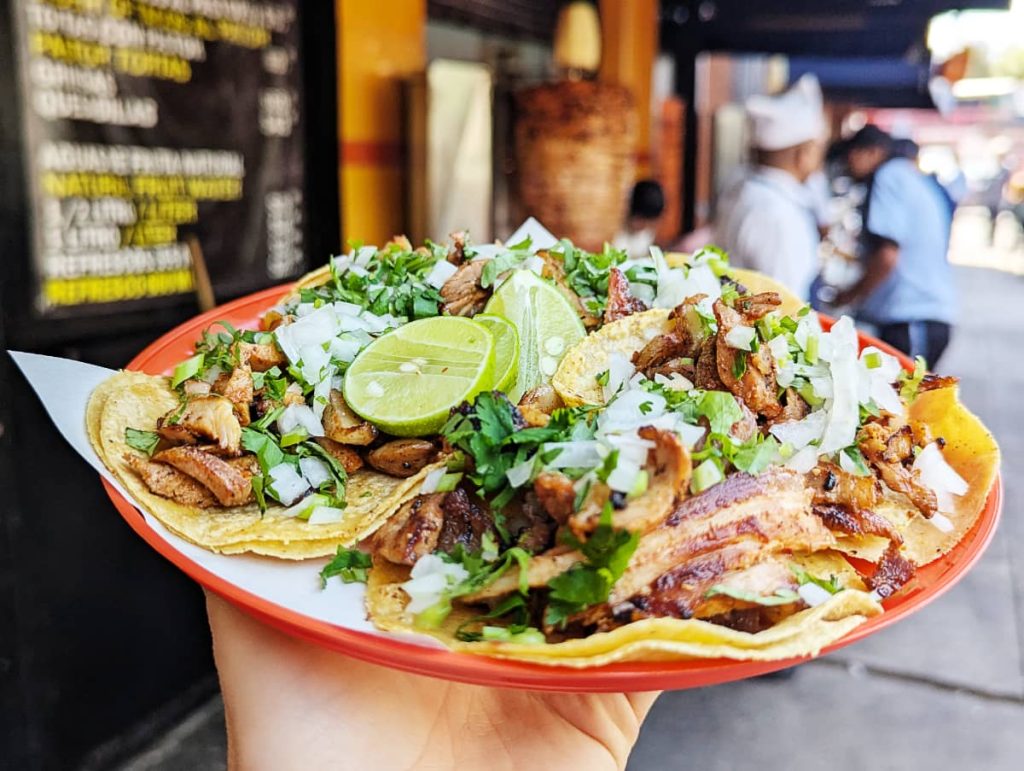
You can’t talk about street food in Mexico without tacos. There are dozens of different types of tacos in Mexico, but tacos al pastor are the undisputed king. Pork marinated in achiote and dried chilies is cooked on a slow-rotating vertical spit. The meat is shaved thin as it falls onto a double corn tortilla and topped with cilantro, onion, and a slice of pineapple.
Beyond tacos al pastor, popular tacos include suadero (beef slow-cooked in fat), chorizo, birria, carnitas, and more. Plus on the more exotic side of Mexican food, you’ll find tacos de tripa (small intestine) and cabeza (slow cooked meats from the cow’s head).
5. Street Corn
Elotes, esquites or doriesquites? That’s a question I often ask myself when I’m craving a street snack in Mexico.
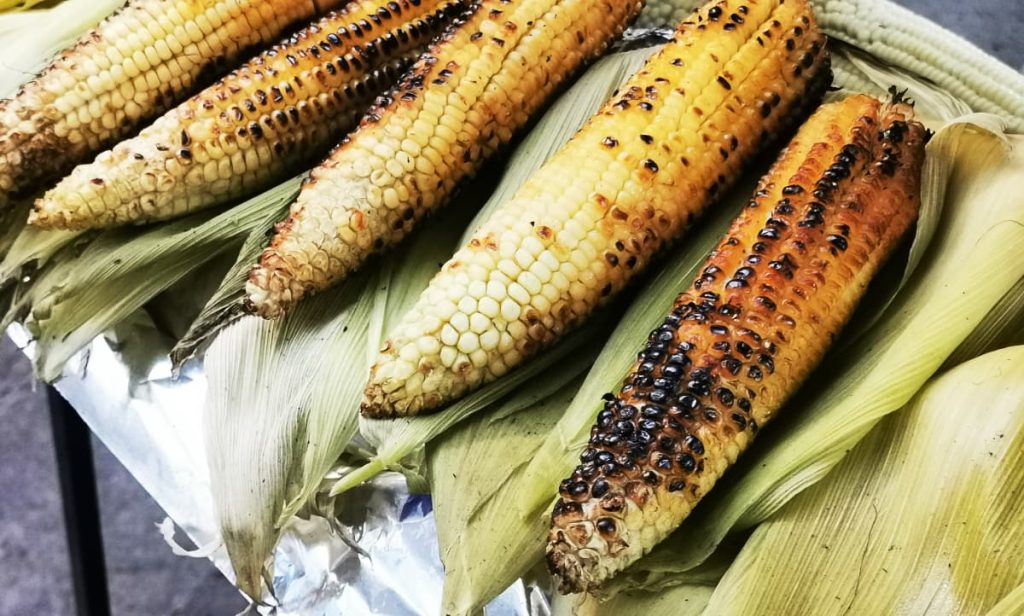
These three are a variation of the same staple: boiled maize (corn) served with rich, creamy toppings like mayonnaise, crema, cotija cheese, and the characteristic Mexican spice.
Elotes are served on the cob, esquites in a cup with liquid, and my personal favorite, doriesquites are a single serving bag of nacho cheese doritos split open along the side and filled with esquites and the classic toppings.
The difference between elotes and esquites comes down to presentation more than flavor, though you should try them all at least once.
6. Tlayudas
A specialty from Oaxaca, a tlayuda is a large, thin corn tortilla toasted and covered in toppings. The texture is thinner and crispier than the majority of corn masa based dishes.
It’s spread with a thin layer of asiento (unrefined pork lard) and seasoned black bean paste, then topped with shredded quesillo (stringy cheese from Oaxaca), shredded cabbage, avocado. It’s served sencillo (as is) or with your choice of meat such as tasajo (salty cured beef) or chorizo.
In Oaxaca, you’ll find them at a few street stalls, but more often at small restaurants that serve little else. They come open-faced or folded in half, and the best are toasted over hot coals until crispy.
7. Memelas
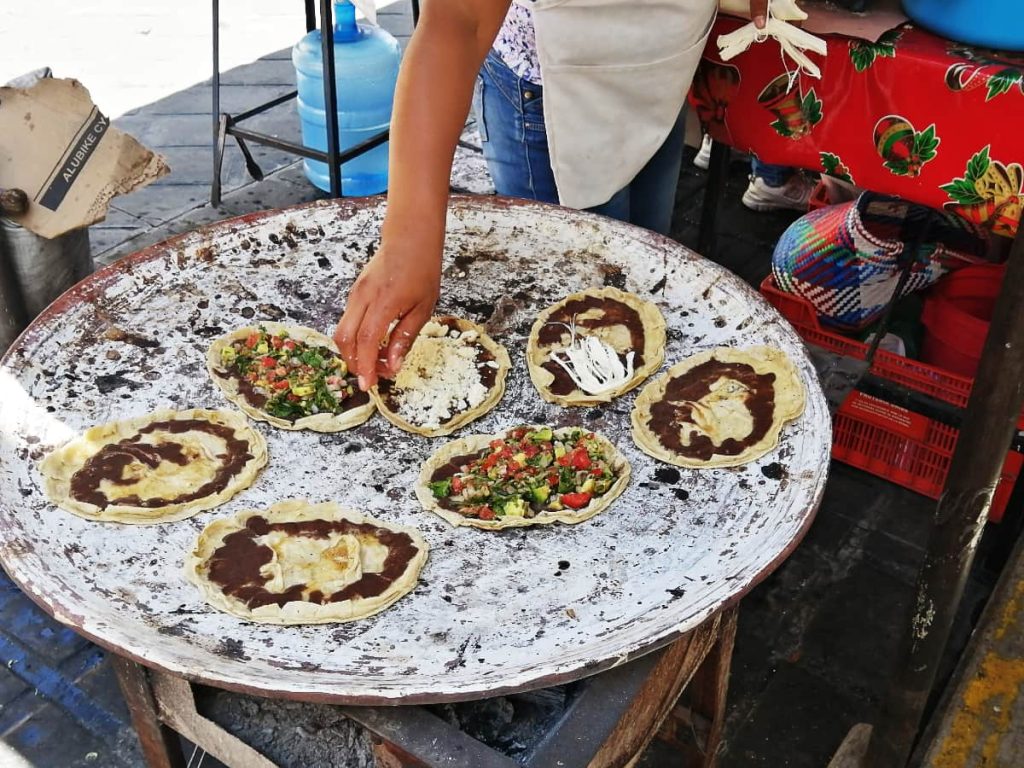
Memelas are one of the most common street foods for breakfast in Oaxaca. These flat, oval discs of masa are thicker than a tortilla and traditionally cooked on a comal with asiento, though you can ask for them without it.
Most streets stand smear them with a thin layer of beans, though some use salsa instead. When you order, they’ll ask whether you want queso or quesillo. Or you can choose chorizo, tinga de pollo, or another type of filling.
8. Tamales
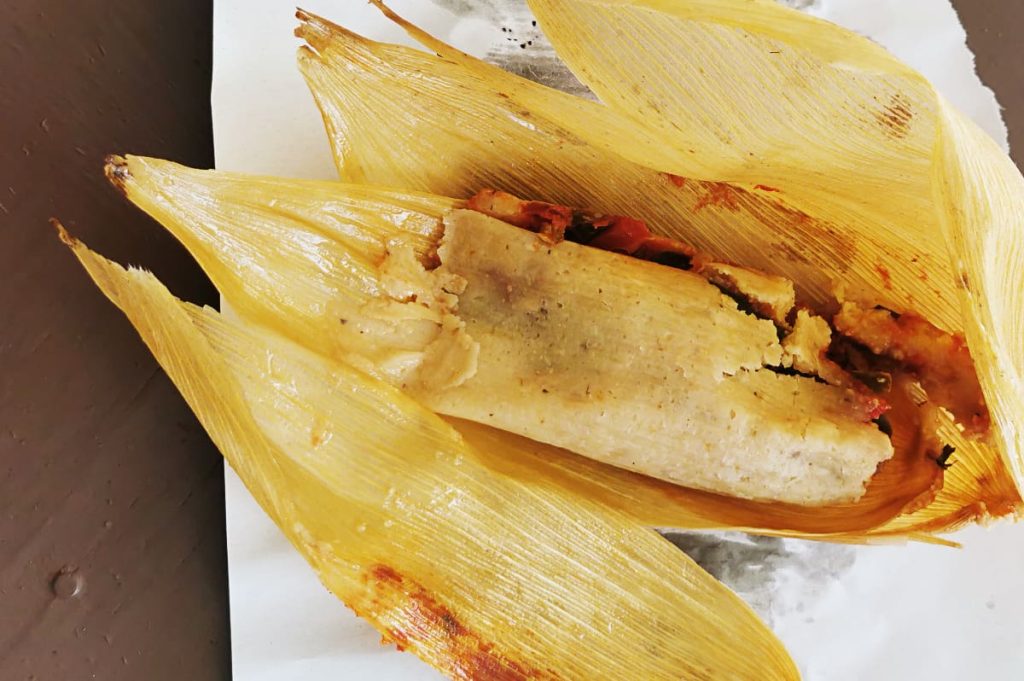
Wrapped in corn husks or banana leaves and steamed to fluffy perfection, tamales are a staple of Mexican street food. There are dozens of types of tamales in Mexico.
Made from masa and filled with savory meats, mole, or spicy rajas (poblano peppers). Tamales are sold out of large silver steaming pots mounted on tricycle push carts as vendors move around the streets.
9. Quesadillas
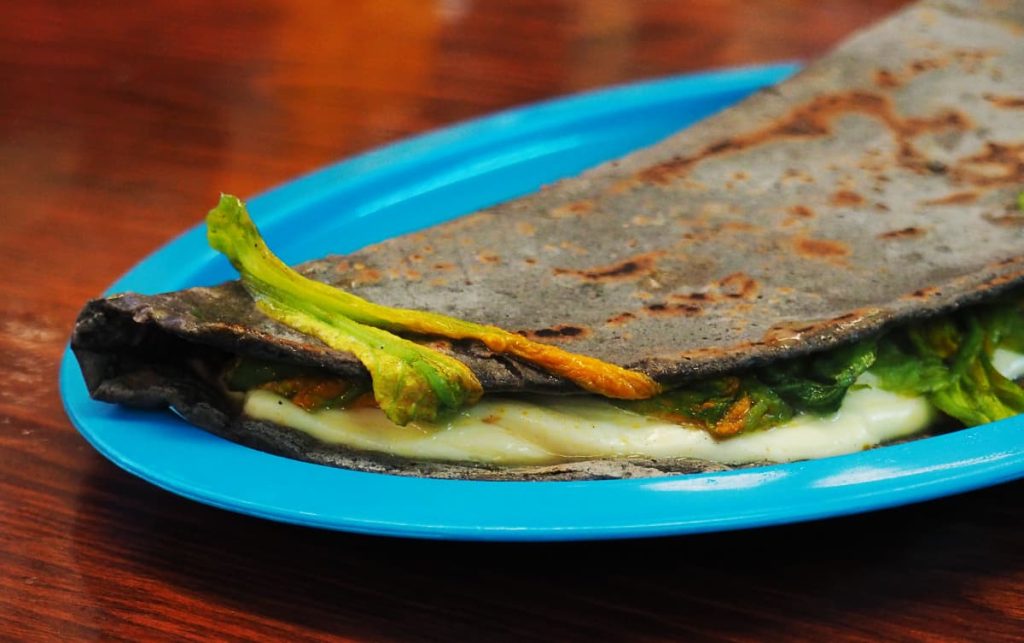
Street quesadillas in Mexico are often made from corn masa folded over fillings and cooked fresh to order on a hot comal. Fillings range from stringy quesillo to stewed meats, chicharron prensado (pressed pork rind), or delicate flor de calabaza (squash blossoms).
Note: If you’re eating street food in Mexico City, quesadillas do not automatically come with cheese. You’ll need to explicitly ask for it!
10. Tortas
Tortas are hearty street sandwiches served on bolillos or teleras, two types of crusty white bread rolls with a soft interior.

The bread is lightly toasted on a griddle and layered with mayonnaise, refried beans, chiles en vinagre (pickled chilis), tomato, avocado and your choice of protein. Popular choices include milanesa (breaded cutlet), chorizo (spicy sausage), or pierna (pork leg).
11. Hamburgers
Hamburgers are probably the last thing on your mind when you think of Mexican street food. But Mexico’s twist on this American favorite doesn’t hold back.
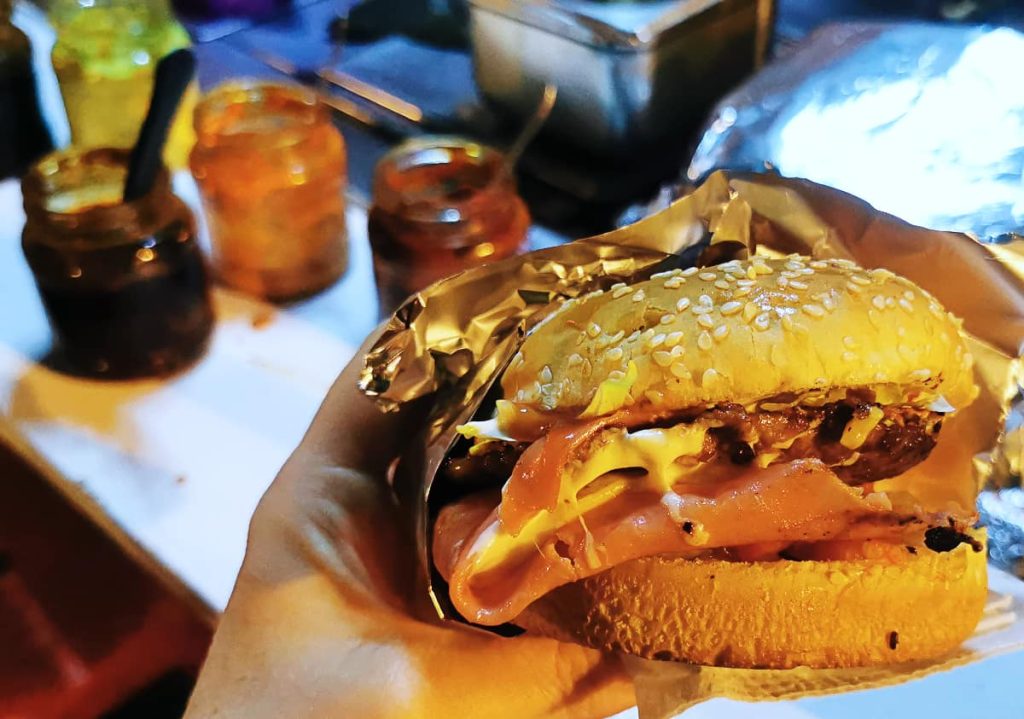
A thin, crisped-up beef patty is stacked with ham, cheese, and quesillo, then topped with diced onions, lettuce, tomato, chili, and pineapple, plus the usual mustard, ketchup and mayonnaise served on a soft bun.
If you prefer more meat, order a doble (double). When they’re done right, the quesillo is placed on the grill first until it melts. Mexican hamburgers are messy and satisfying.
12. Hot Dogs
Sold from the same carts as hamburgers, street hot dogs across Mexico get a similar twist: wrapped in bacon and seared on a flat-top griddle until crisp. It’s served in a soft bun and loaded with toppings like grilled onions, diced raw tomatoes, pickled jalapeños, mayonnaise, mustard, and ketchup.
13. Molotes
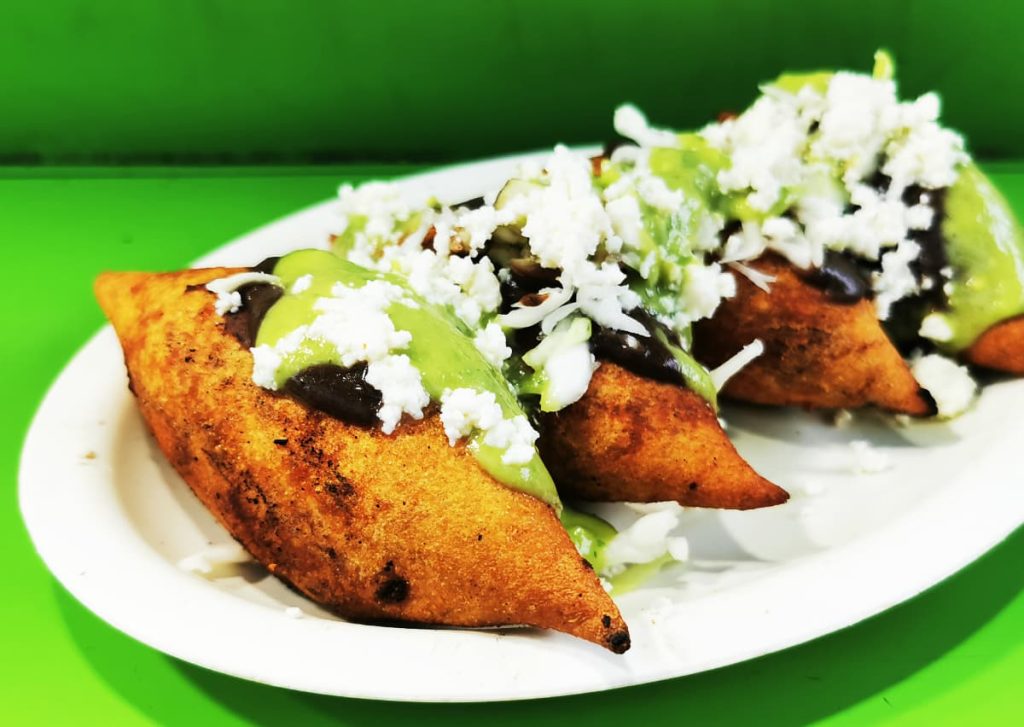
Common in Puebla, Oaxaca and Veracruz, molotes are fried masa pastries shaped into small cylinders or crescent shapes. The dough is stuffed with savory fillings, most commonly mashed potatoes with chorizo or seasoned plantains, then deep-fried in oil until golden and crispy on the outside. They are served hot, covered in cream and crumbled cheese with a side of salsa.
14. Sopes
Sopes start as thick rounds of corn masa cooked on a hot griddle. As soon as the masa comes off the heat, the cook pinches the outer edges upward by hand to form a shallow rim that holds the ingredients in place. The base is lightly crisped, coated with refried beans, and topped with meat, chopped lettuce, crumbled cheese, and spoonfuls of salsa.
15. Panuchos
Hailing from the Yucatán Peninsula, panuchos are small corn tortillas cooked on a comal until they puff up slightly. The top layer is slit open to create an inner pocket, filled with refried black beans, and sealed shut. The stuffed tortilla is lightly fried and topped with meat, typically cochinita pibil (slow-roasted pork) or shredded turkey, plus pickled pink onions and sliced avocado with a habanero salsa on the side.
16. Pambazos
These street sandwiches are made with soft white bread rolls soaked in a mild guajillo chili sauce, giving them their recognizable deep red color. After absorbing the sauce, the roll is toasted on an oiled griddle until crisp on the outside. It is then stuffed with cooked potatoes, chorizo, shredded lettuce, sour cream, and crumbled cheese.
17. Empanadas
These are one of those snacks that vary depending on the region of Mexico you’re in. These half-moon pastries are made from corn masa (or wheat flour in northern states).
They are stuffed with savory fillings like seasoned ground beef, shredded chicken, chicharrón, or cheese, then folded, sealed, and deep-fried in hot oil or cooked dry on a comal until crisp.
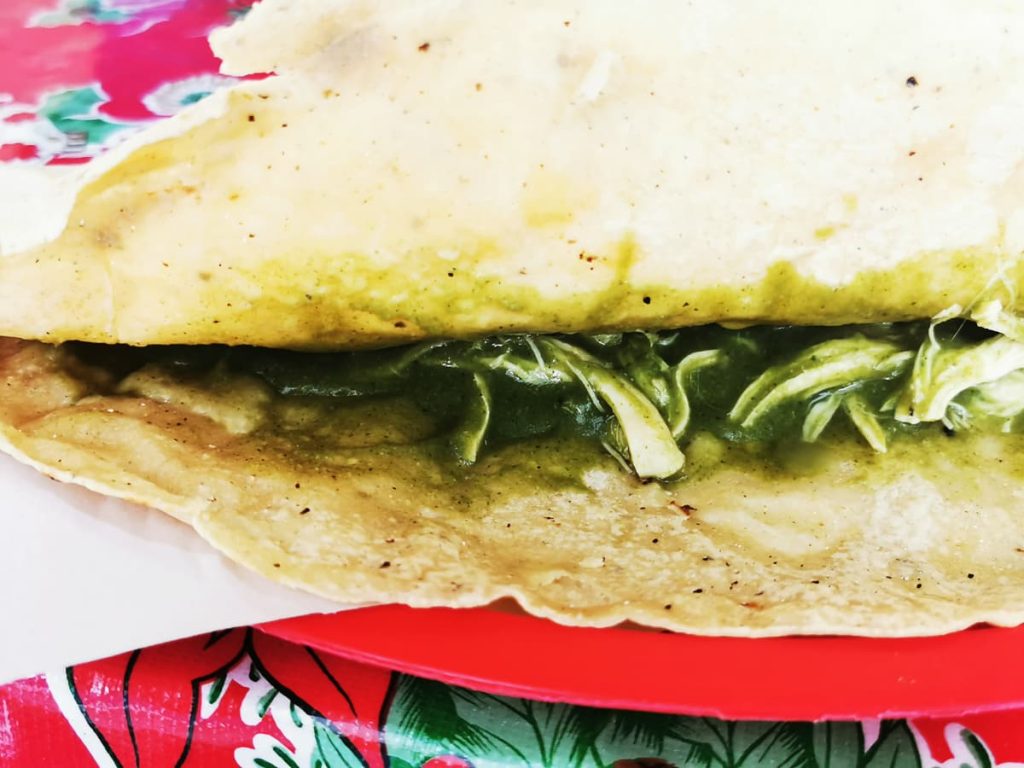
In Oaxaca they look completely different. They’re much larger, made by pressing corn masa into a large tortilla and filling it with chicken in mole amarillo or verde, then cooking it on a comal until sturdy.
18. Tostadas
Built upon a whole corn tortilla that has been deep-fried or toasted until crisp, tostadas are spread with a thin layer of warm refried beans or seasoned mayo.
Fresh seafood like shrimp, octopus, or ceviche is popular in coastal regions. Tinga de pollo (shredded chicken in a chipotle-tomato sauce), picadillo (seasoned ground meat with diced vegetables), or salpicón de res (a chilled shredded beef salad tossed with lime, onions, cilantro, and radishes) are popular inland.
Tostadas are finished with a mountain of shredded lettuce, sliced avocado, crumbled queso fresco (fresh cheese), cream, and salsa.
Tip – If the toppings are piled high, the easiest way to eat a tostada is to break off a piece and use it to scoop up some of the toppings rather than try to pick up the whole thing.
Mexican Street Snacks
From morning to evening you’re likely to see a variety of street carts offering snacks for kids, workers, and everyone in between.
I remember when I was a kid, my mom would give us 20 pesos to pick out an after school snack. It was always hard to choose from the colorful array of street snacks at the carts parked in front of the school.
19. Jicaleta
A popular snack near schools and parks, a jicaleta is a thick, round slice of fresh jicama, a crunchy vegetable that is described as a cross between a potato and an apple.
The raw jicama is served on a wooden stick like a lollipop and coated in sweet-and-sour chamoy. It’s then dusted with brightly colored powders in flavors ranging from sweet to spicy.
20. Chicharrines
A wildly popular wheat-flour street snack in Mexico. Puffed in boiling oil until crisp and light, they come in iconic shapes like ruedas (small wagon wheels), grid sheets, or rings. Street vendors scoop them into plastic bags and top each one to your taste: fresh lime juice, hot sauce (like Valentina), and a dusting of chili powder or chamoy.
21. Chicharron preparado
A large, rectangular sheet of puffed wheat dough spread with mayonnaise or cream and topped with shredded cabbage, cueritos (pickled pork skin), diced tomatoes, and avocado slices. It is finished with crema, crumbled cheese, lime juice, and salsa.
22. Papitas
Fresh, thinly sliced potato chips fried at street carts in large metal kettles until crispy. Some vendors toss them in a dry chili seasoning blend to make papitas adobadas. They are then scooped into plastic bags and topped with a squeeze of lime and your choice of hot sauce.
23. Pineapple, Mango, and Other Fruit

Fruit is cut up and sold in bags through the morning and into the early afternoon. You can buy your fruit plain, but if you want to eat it like a local, say yes to the chili powder, tajín, hot sauce, chamoy and lime.
Sweet Street Snacks
Sweet street snacks in Mexico aren’t an afterthought. They’re their own category, built on caramelized sugar, tropical fruit, and dairy in various forms.
A cold paleta (popsicle) on a hot afternoon is one of the most refreshing. And that’s just one entry point into the wider world of Mexican sweets.
24. Marquesitas
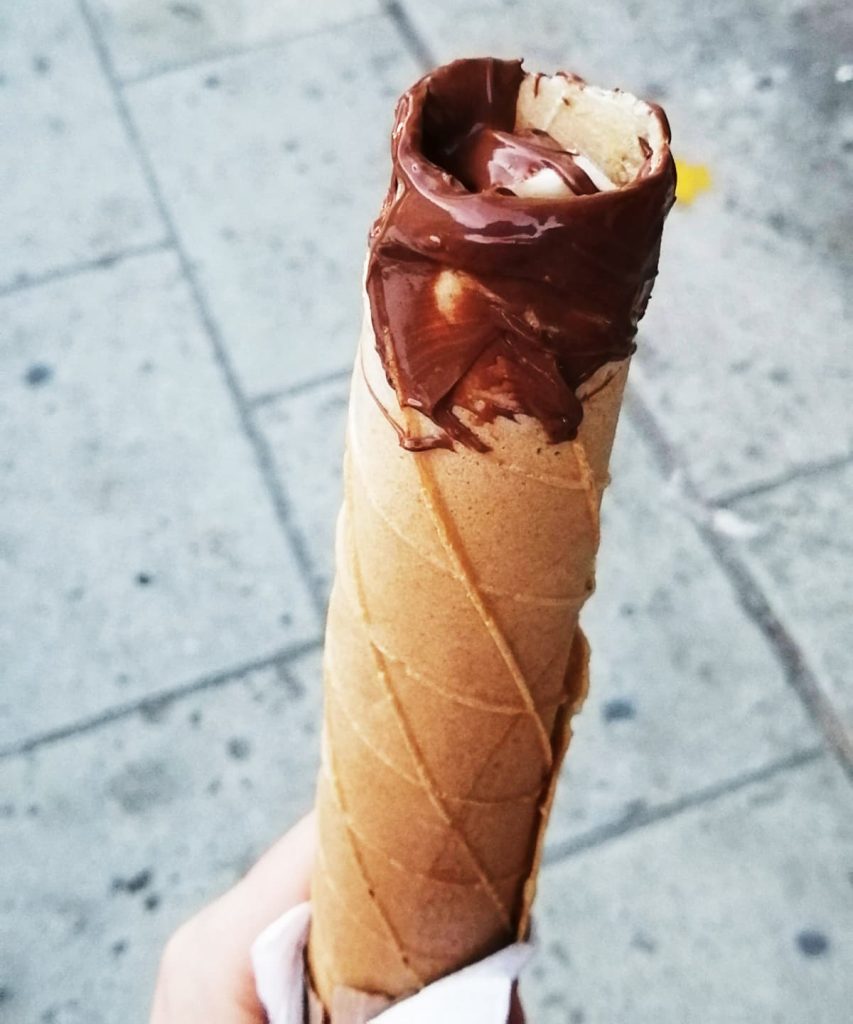
Originating in the Yucatán, these thin, crispy rolled wafers are prepared on a heated iron press. They are filled with sweet toppings like Nutella, cajeta (caramel), or condensed milk, paired with shredded queso de bola (a creamy Dutch cheese) for a blend of sweet and savory flavors.
25. Pan Dulce
Mobile carts roll through neighborhoods with a wide selection of traditional Mexican sweet breads in the mornings and evenings. Listen for a bicycle horn or song, then grab one of the local favorites like shell-patterned conchas, buttery cuernos, and sugar-dusted orejas.
26. Platanos Machos
Sweet plantains cooked on a flat griddle or steamed in a mobile steam cart until soft. They are sliced open and drizzled with sweetened condensed milk, fruit jam, or cream.
27. Camotes
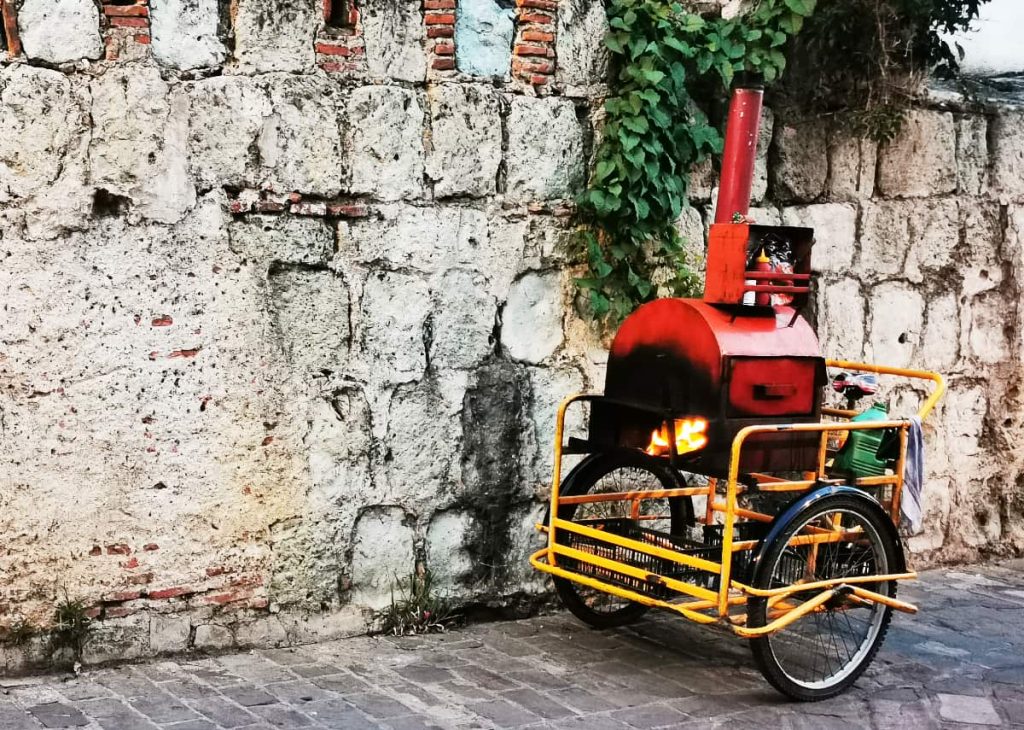
In the evenings, street vendors push specialized metal steam carts that release a distinct whistle sound through neighborhood streets. Inside, sweet potatoes slowly steam until soft. They are served hot with condensed milk and cinnamon.
28. Paletas
Handcrafted popsicles made from fresh ingredients. They come in two main styles. paletas de agua are water-based popsicles made with fresh fruit like passion fruit, lime, or tamarind. paletas de leche are milk-based popsicles made with ingredients like coconut, scalded milk, or vanilla.
29. Raspados
Shaved ice, Mexican style, topped with fruit syrups made from guava, tamarind, mango, or walnut. They are often layered with sweetened condensed milk or finished with chamoy and chili powder.
30. Fresas con Crema
A straightforward dessert of fresh chopped strawberries served in a cup with a sweetened cream mixture made from sour cream, condensed milk, and vanilla. It’s especially popular in Guanajuato and Michoácan, two states that grow a lot of strawberries.
What is typical Mexican street food?
Typical Mexican street food is made up of quick, handheld dishes centered on corn masa, meats, and regional seasonings. Common items include tacos, tamales, tortas, and masa bases like sopes or huaraches, often served alongside fresh salsas, lime, and street snacks like elote or seasonal fresh fruit.
Wrapping Up Street Food in Mexico
Eating Mexican street food is one of the most fun parts of traveling in Mexico. Going past standard restaurant menus opens up centuries of real food traditions, from pre-Hispanic blue corn tlacoyos to Yucatecan panuchos.
Once you know what each dish is and how it’s prepared, you can order from any street stall with confidence. If you want to eat like a local, it means knowing there’s more to the street carts than tacos and tamales.