
Elotes vs Esquites in Mexico: What’s the Difference?

The air smells of toasted corn, lime, and chili. You know exactly the flavor you’re craving, but when it’s your turn to order, you freeze and ask yourself, “What’s the difference between elotes and esquites?”
With the exact same ingredients and nearly the exact same taste, it’s no wonder these two iconic snacks get mixed up. Both deliver that irresistible combination of sweet corn, creamy mayo, salty cotija cheese, and a kick of chili powder. But in Mexico, elote is served on the cob and esquites are served in a cup with liquid.
And that’s just the basics. The simple elotes and esquites of my childhood have come a long way. Today you can find versions with bone marrow, served over instant ramen, or topped with chapulines (grasshoppers). Plus there’s doriesquites and tostiesquites which are built directly inside a bag of chips.
Let’s sort out exactly what separates elotes vs esquites in Mexico, the unique toppings to look out for, and another Doritos version that gets a little loco.
What’s the Difference Between Elotes and Esquites?
The main difference between elotes and esquites comes down to presentation more than flavor. Elotes are made with whole corn on the cob and esquites are made with the corn cut off the cob. That’s it! Same flavor, same toppings, mostly. The details are where it gets interesting.
What are Elotes?
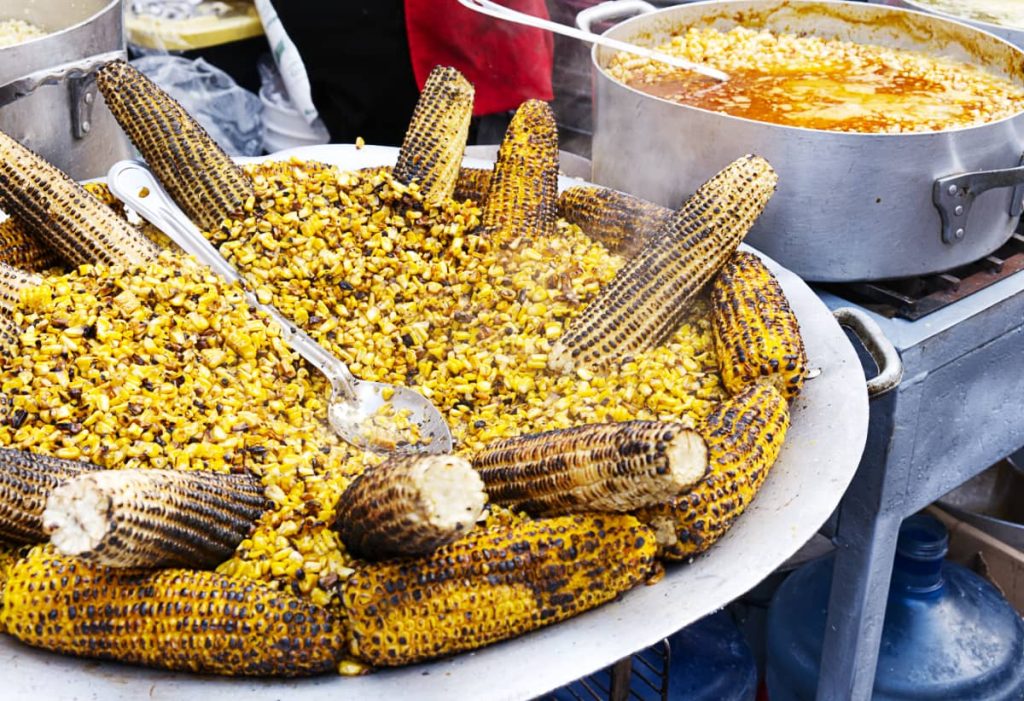
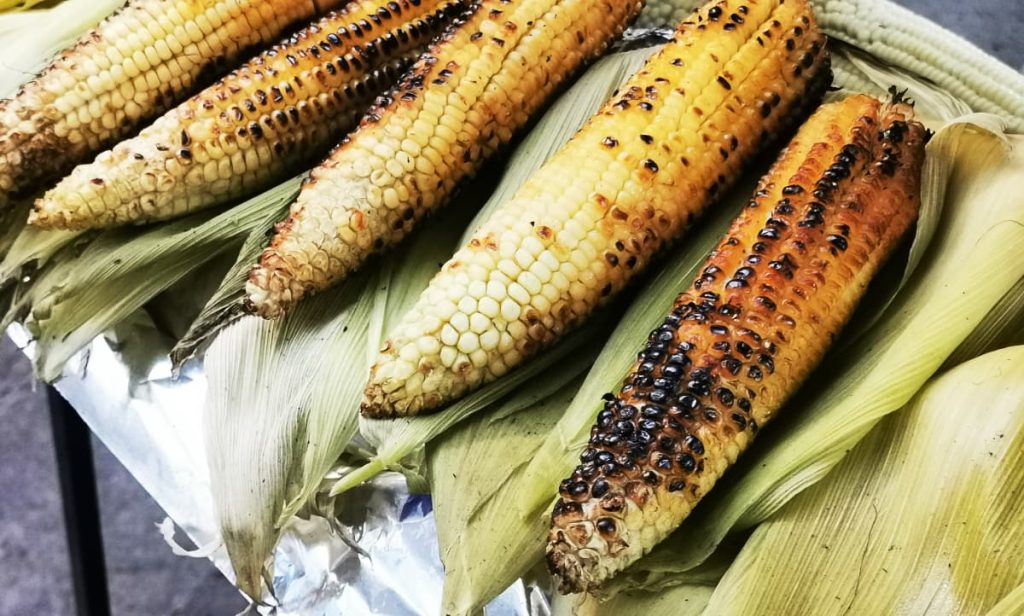
Elotes are corn on the cob steamed in a giant cazuela (pot) and skewered on a stick. It’s one of the most popular Mexican street snacks. Some vendors give it a quick char on the grill for extra depth and a slightly smoky edge. Then it’s slathered in mayonnaise, and a generous coating of cotija cheese until the whole cob turns white. It’s finished with a squeeze of lime and chili powder.
Good to Know: You can ask for your elote “sin picante” if you don’t want any spice.
How to Pronounce Elote
If you know vowels in Spanish, you should have no problem with pronouncing elote. It’s “eh-LOH-teh”
What are Esquites?
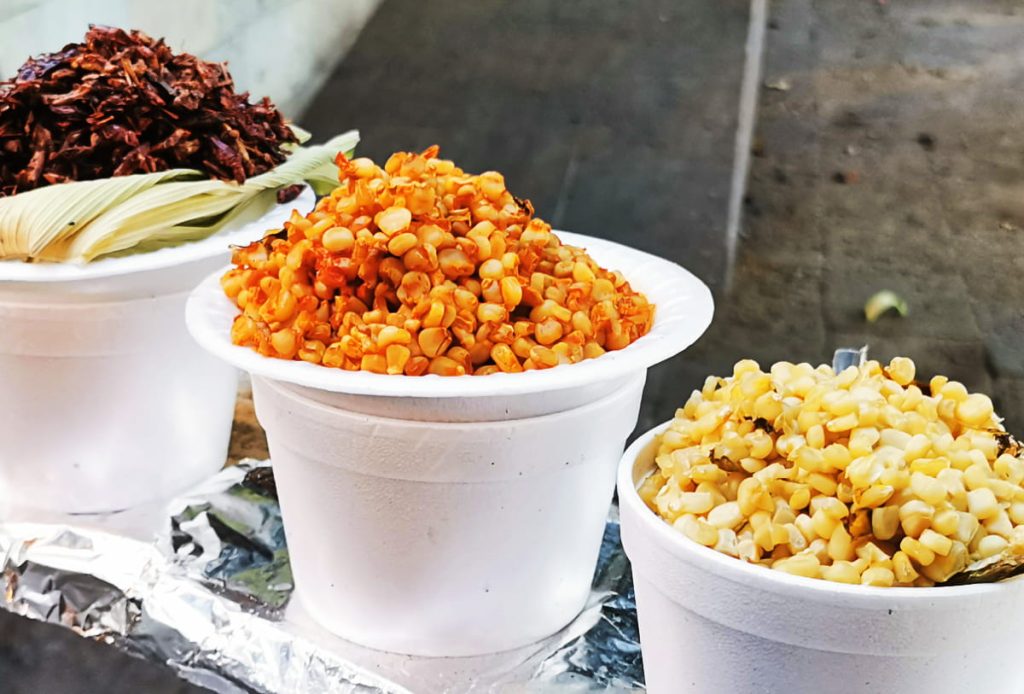
Esquites are corn off the cob, simmered in a large cazuela, sometimes with aromatics like epazote (an earthy herb used in traditional Mexican cooking). They are spooned into a styrofoam cup with some of the liquid and layered with mayonnaise, a generous handful of cotija cheese, a squeeze of lime and chili powder or salsa.
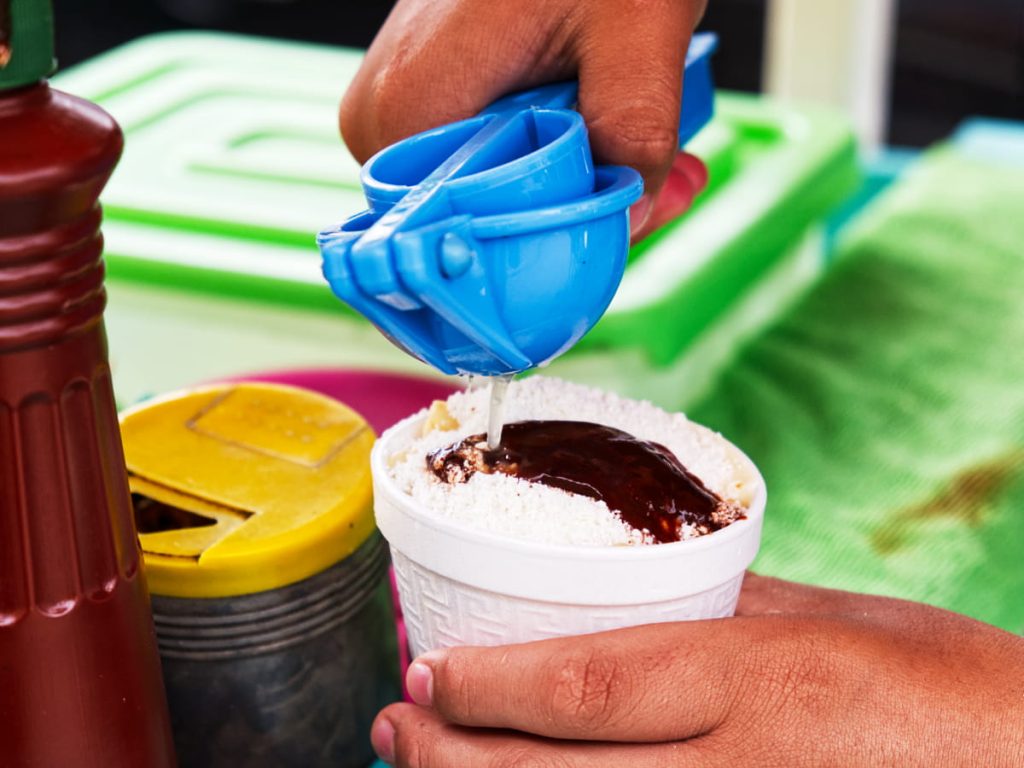
Did you know? In some areas, particularly the north of Mexico, esquites are called elotes en vaso (corn in a cup).
How to Pronounce Esquite
Esquite is easier to pronounce than it looks. Try saying it like “ehs-KEY-teh”.
Different Types of Esquites
The simple elotes and esquites of my childhood have undergone a culinary evolution as of late. Here’s where things get interesting:
- Maruesquites – A combination of the popular ramen brand Maruchan topped with esquites prepared in their usual fashion.
- Esquites con Tuetano – Esquites cooked in bone broth and served with bone marrow.
- Esquites con Patas de Pollo – Esquites cooked and served with chewy chicken feet in a chicken broth.
- Esquites con Chapulines – Traditional esquites sprinkled with crispy toasted grasshoppers, one of the weird foods in Mexico worth trying at least once and a grasshopper salsa.
- Esquites con Camarón – Esquites with shrimp, either as a soup, grilled, or in different preparations such as al mojo de ajo (garlic soaked) or a la diabla (in a spicy chili marinade).
What are Doriesquites and Tostiesquites?
Doriesquites take classic corn esquites and build it right inside the bag of chips. Vendors hang a variety of chips from the cart for you to choose from, though Doritos and Tostitos are most popular. They split the bag open horizontally to use as a bowl and layer it with hot corn.
All the usual toppings go on top: mayo, cotija, lime, chili powder and salsa. The chips soften slightly where they meet the corn and stay crisp everywhere else. The chips add their own zesty taste to the mix.
Tip – The name changes with the chips. Doritos are doriesquites. Tostitos are tostiesquites. And yes, you can get rufflesquites and cheetoesquites as well.
Dorilocos
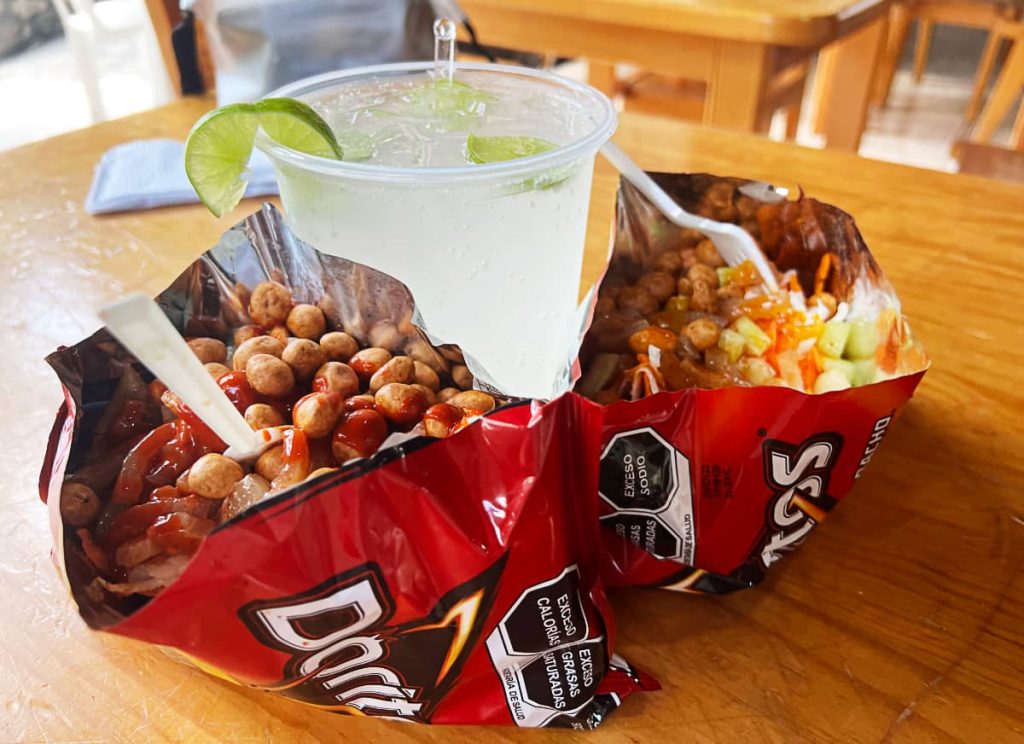
With all the innovation on the classics, it could be easy to confuse dorilocos with doriesquest. And this doesn’t just happen to foreigners! I made the dorilocos vs doriesquites mix up the first time I saw them. So what’s the difference?
Dorilocos are prepared in a similar way (a Dorito bag sliced horizontally) but filled with all sorts of loco (crazy) toppings like pickled pork skin, Japanese peanuts, and even gummy candy. They’re not my favorite, and certainly not something I would recommend to satisfy a creamy esquites craving, but worth a try if that sounds like your thing.
How to Order
The first decision you need to make is if you want elote, esquites, or doriesquites. Once you’ve ordered, the vendor usually asks, “con todo?” (with everything) and that’s your opportunity to customize your order: un poco de mayonesa, más queso, whatever you want.
And usually there’s a choice of chili: chile de árbol, búfalo, salsa macha, and more. If you ordered esquites, give it a quick stir to get everything mixed up.
Hungry for more Mexican food? Next up:
🌮 All the Different Types of Tacos in Mexico
☕ Traditional Breakfast in Mexico
🫔 What is a Tamale? And How to Eat Them
🌶️ Unique Foods in Mexico and Where to Find Them
Where to Find Elote and Esquites in Mexico
Elotes and esquites are a street snack. You’ll find them at street carts in cities and pueblos in the evenings. Some Mexico City markets are also known for elotes as well as the neighborhood of Coyoacán.
Recently, however, it’s becoming more common to find small businesses that offer this street food in a variety of presentations. There’s even a famous elote bar in Oaxaca where you can add your own toppings.
And if you find yourself in Guanajuato, check out our list of the best things to do which features the impressive elote and esquites stand in San Fernando Plaza.
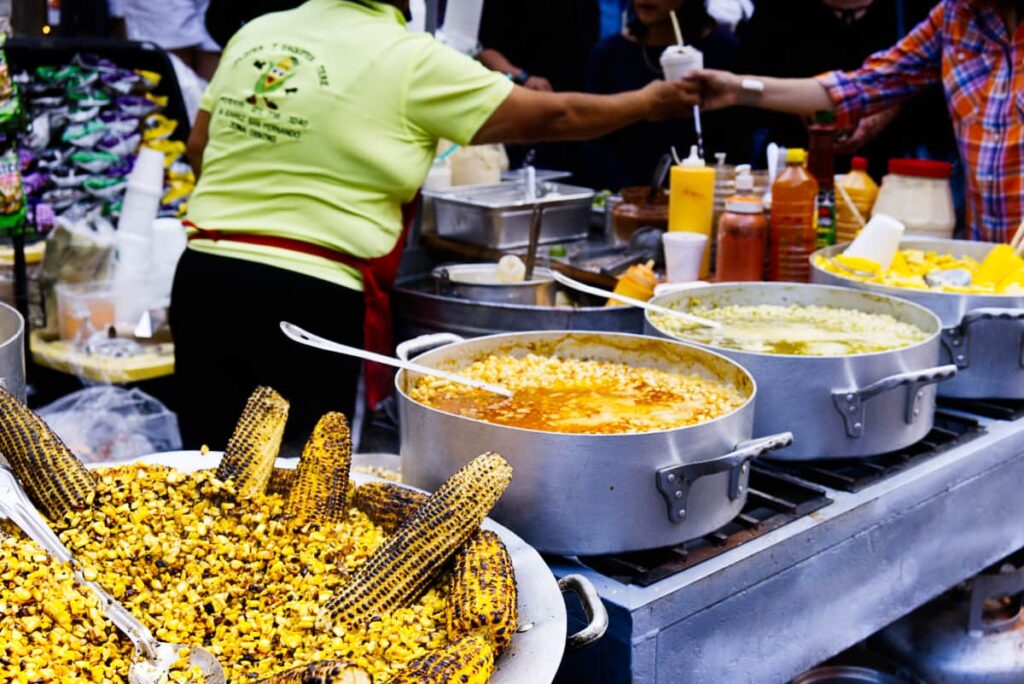
What do esquites taste like?
Esquites taste starchy and chewy from the maize, and creamy and salty from the mayonnaise and cheese. Lime adds brightness, chili powder and salsa add heat. Maize in Mexico is not sweet like corn in the US. It serves as a vessel for toppings and a texture component.
Did you know? Corn as we know it didn’t start out looking anything like today’s cobs. It was domesticated from a wild grass called teosinte in southern Mexico thousands of years ago, making Mexico the birthplace of corn, esquites and elotes included.
Wrapping Up Elote vs Esquites
Elotes vs esquites really comes down to a stick or a spoon. They are essentially the same ingredients in different presentations.
Once you know that, ordering either one is simple: decide which one you want, let the vendor build it, and customize as you go. Now, go order some esquites or elotes or doriesquites and as we say in Mexico, buen provecho!