
Alausí Ecuador: What to Do Beyond the Devil’s Nose Train

Most travelers pass through Alausí, Ecuador on the way to somewhere else, stopping just long enough to ride the Devil’s Nose train before moving on. After staying three nights (partly as a rest during my 6 weeks in Ecuador), I can tell you that’s a mistake.
This small town in Chimborazo province earned its Pueblo Mágico status for a reason. A day trip to the Lagunas de Ozogoche, where Andean tradition is still very much alive, is reason enough to stay overnight. Then add the Nariz del Diablo hike and the Indigenous Sunday market, and you can see why I stayed so long.
I recommend staying in Alausí for one or two nights. Alausí rewards travelers willing to slow down, even if just for a single night.
This article may contain affiliate links. This means if you click a link on my website and make a purchase, I earn a commission at no additional cost to you. For full information, please see my disclaimer here.
7 Fun Things to Do in Alausí
For most travelers, there’s one reason to visit Alausí: the Devil’s Nose train. But between the Nariz del Diablo hike, the weekly Sunday market, and the Lagunas de Ozogoche, Alausí earns an overnight stop on your itinerary.
1. Hike Nariz del Diablo (Devil’s Nose Hike)
If your visit doesn’t line up with the train’s operating days, or you’d rather spend a morning in nature, I recommend hiking Nariz del Diablo instead. You’ll be rewarded with dramatic views of the train line and the ridge it’s named for from above instead of the train car.
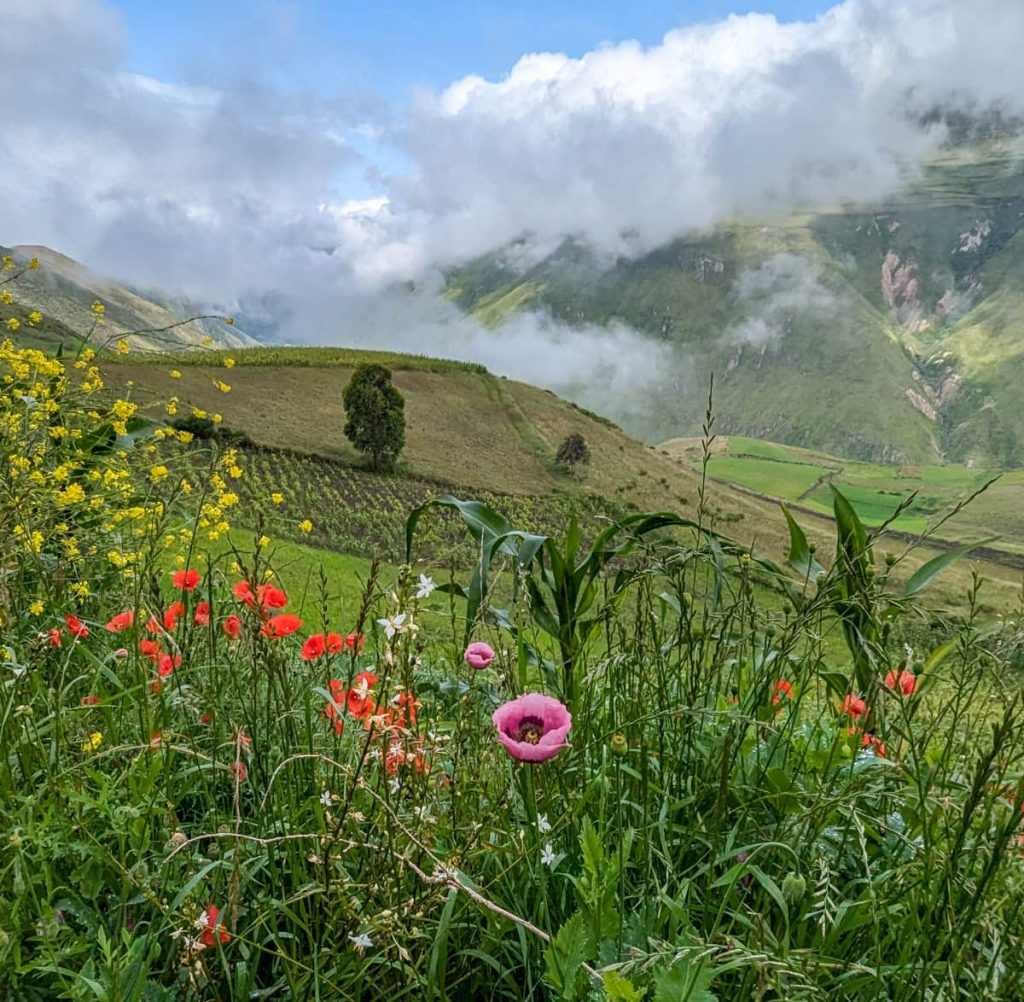
The trail starts at the edge of Alausí, near Plaza de Toros (map), and eases you in slowly. As you climb up, the trail narrows onto the mountain’s backbone lined with plant life and wildflowers. When I did the Nariz del Diablo hike in late April, the clouds rolled in through the valley, drifting over the mountain peaks and gorges carved by water.
It isn’t until you round the first major corner that the views open up to small farms along the slopes of the rugged mountains and the ridge that the hike is named for. I passed a few local farmers and their animals, including two pigs I startled from a deep sleep. They were sprawled in the trail and clearly not expecting company.
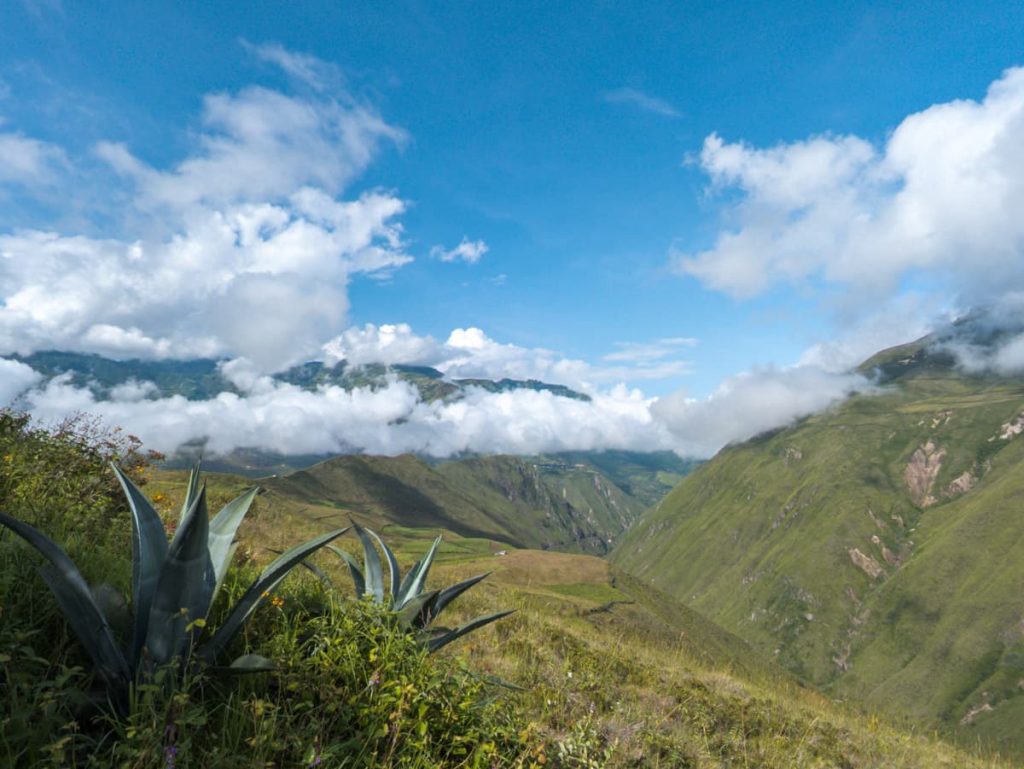
I got so caught up in admiring the scenery that I walked straight past the turnoff for the Nariz del Diablo, the narrow spine that the whole route is named for. Fortunately I stopped to talk with a woman leading her donkey along the trail who kindly pointed out that I missed the turn off.
Did you know? This route follows the same path traditionally walked by farmers from the nearby town of Nizag carrying their produce to and from Alausí. Some of that daily life is still visible on the trail.
I chose to end the hike in Nizag rather than follow the same route back. And with some patience, I found a ride back to Alausí with a local driver. All in, including the time to find the ride, plan on around 5 hours if you take your time like I did. The hike itself is approachable, especially if you’re already accustomed to the altitude of Alausí.
2. Devil’s Nose Train Ride
When my friend who lives in Cuenca suggested that we stop in Alausí to ride the Devil’s Nose train after visiting Baños de Agua Santa, I didn’t need convincing. The name alone had me hooked.
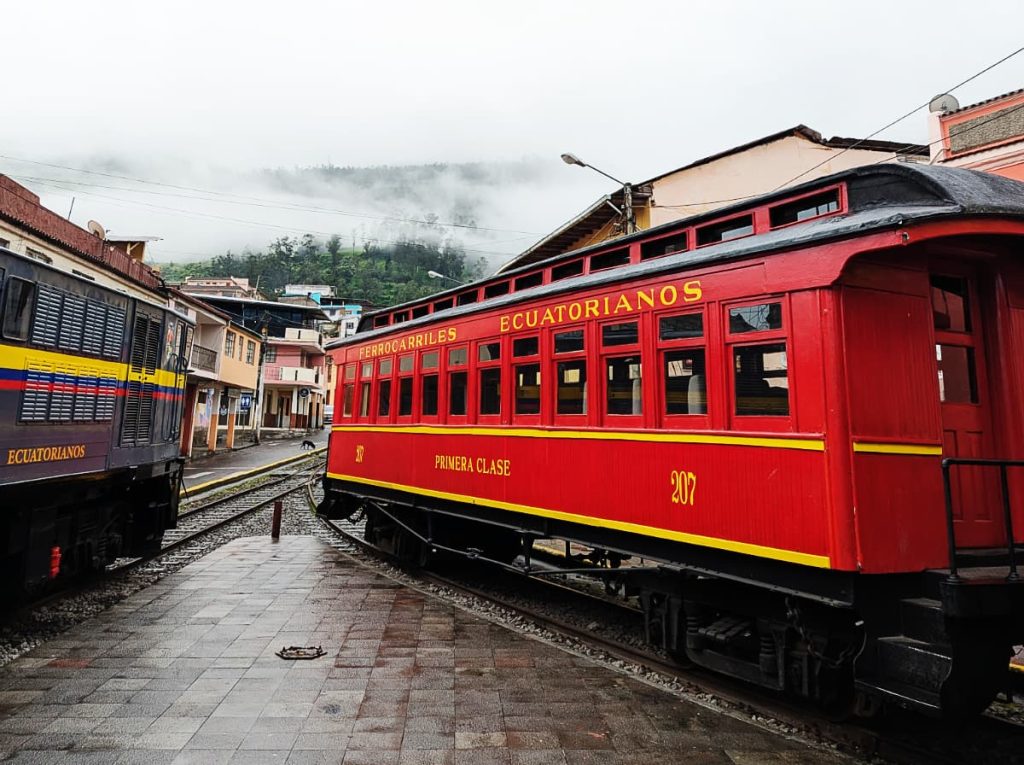
We quickly learned the train ride had been suspended but Alausí Pueblo Mágico was already on my radar, and I made a mental note to come back on my own.
Lucky for you the train has now restarted. Here are the details to ride the train in Alausí:
- Route: Alausí – Sibambe – Alausí
- When: Thursdays-Sundays at 8 am, 11 am, and 2 pm
- Itinerary: a scenic ride to the Devil’s Nose viewpoint, welcome dance from the local communities of Tolte, Nizag, and Sibambe, and free time to browse the artisan stands.
- Tickets: $30 for foreigners, $18 for Ecuadorians. Can be purchased at the train station or online.
Quick History: Construction began in the late 1800s to connect Guayaquil on the coast to the capital city of Quito in the highlands. But it hit what engineers at the time considered an impassable obstacle: a sheer rock face between Alausí and Sibambe.
Their solution was to cut a series of tight switchbacks directly into the cliff, forcing the train to climb and descend by alternating forward and backward, gaining or losing roughly 500 meters of elevation in just a few kilometers.
It remains one of the boldest rail engineering solutions ever built but it came at a real human cost, including workers’ lives lost to the terrain and conditions.
In recent times, the train’s popularity has ignited tourism in this small town. When service was suspended for several years, that flow of visitors dried up with it. Now that the train is running again, the town is still finding its footing, which, if you ask me, is exactly the time to visit.
3. Lagunas de Ozogoche
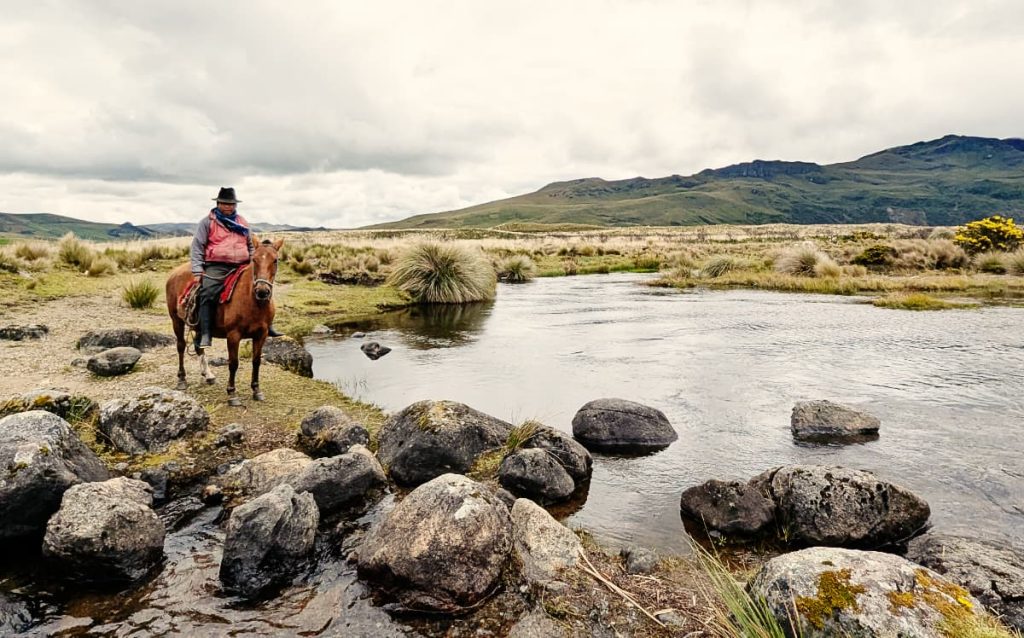
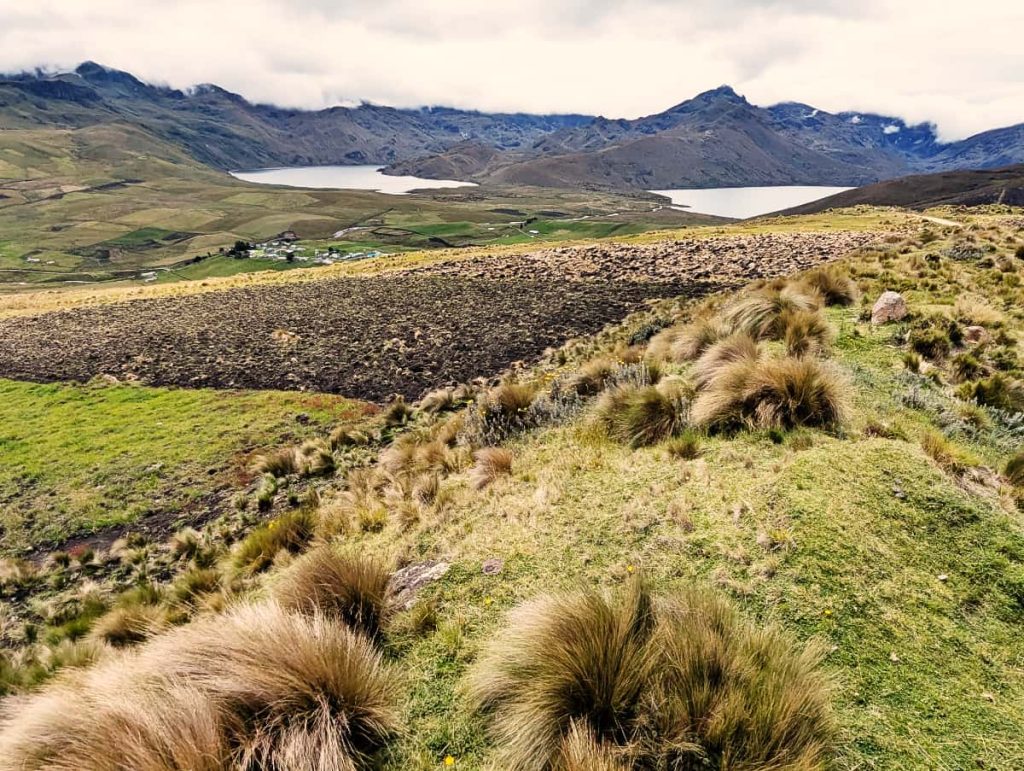
The páramo landscape of Lagunas de Ozogoche is raw and otherworldly: golden grasses rolling across the hills, heavy clouds pressing low over the peaks, and wind strong enough to kick up small white peaks of 20 to 30 cm on the lagoon’s surface. It’s reminiscent of the wild highlands found on a day trip to Cajas National Park from Cuenca.
The truth is, my boots got soaked before I even reached the lagoon. The ground up here is a spongy, acidic peat-like soil that stays saturated. I was starting to second guess my route when a golden dog named Roco appeared out of nowhere and led the way, trotting ahead of me as though he’d guided plenty of lost tourists before.
I later learned there is a Mirador (lookout point) at the edge of the lake. To get there, I think you need to follow the trail on the right from the area where the cars park.
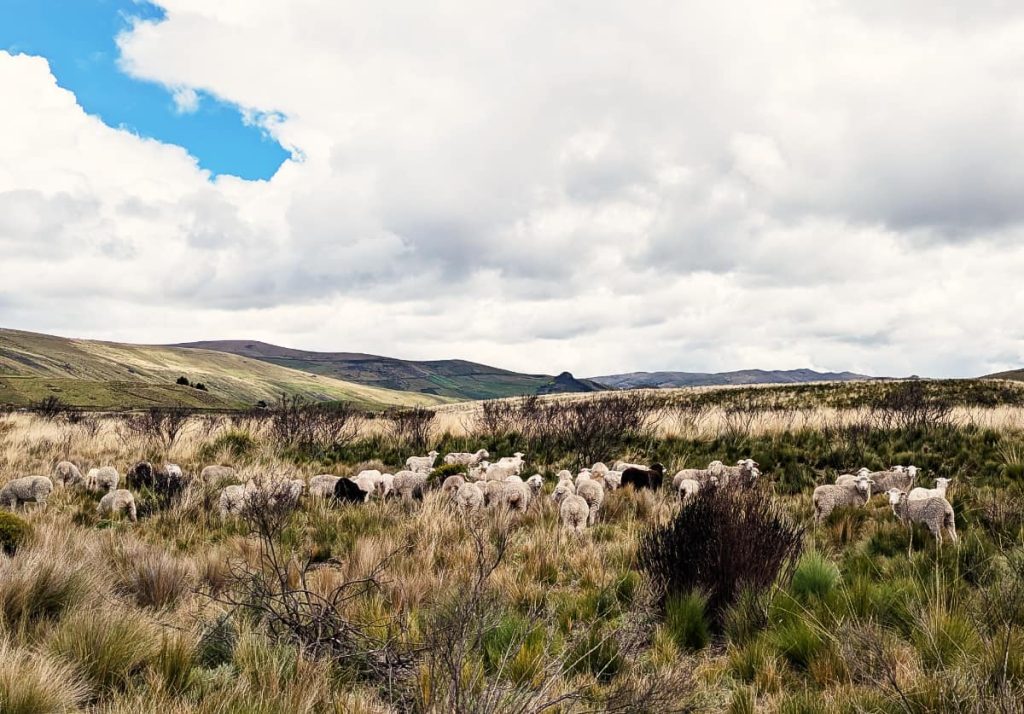
Did you know? The Yachacs, an Indigenous community from the area around the lagoons, have their own explanation for a phenomenon that still puzzles scientists. Each year, Cuvivíes birds (Upland Sandpipers) migrate from thousands of miles away only to plunge themselves into the freezing water and die.
According to locals, the lagoons hold healing powers strong enough to draw the birds to their death. The community treats their arrival as a time of celebration, gathering the birds with music and dancing. Some are cooked into a stew that is believed to bring good luck to those who eat it.
The tradition is honored each year at the Cuviví Festival in early September. In 2023, a documentary about the tradition premiered at Amsterdam’s IDFA festival.
To get here: I took a bus from Alausí to Charicando (map), on the edge of Sangay National Park, and got out along the highway. From there, I negotiated with the driver of a mixto, a shared pickup truck taxi that’s common in rural Ecuador, to take me to the lagoons.
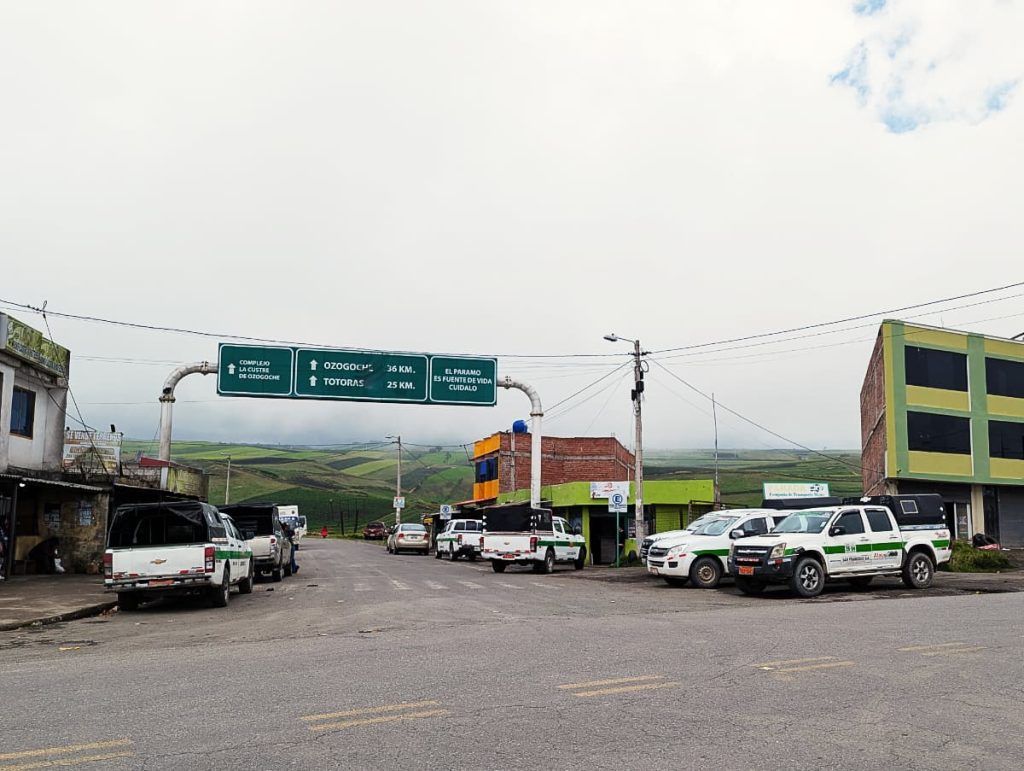
Keep in mind, the driver only spoke Spanish and this was more transportation than a tour. But he was happy to chat with me along the way. If you don’t speak Spanish, I recommend booking a tour instead or arranging a mixto directly from the town of Alausí. I chose this route to support the local community and practice my Spanish.
4. Shop and Eat at the Sunday Market
The Sunday market in Alausí is one of several local markets in Ecuador, drawing rural residents from the region to buy and sell. It takes over several streets on one side of town in the mornings which is the best time to wander through the stalls.
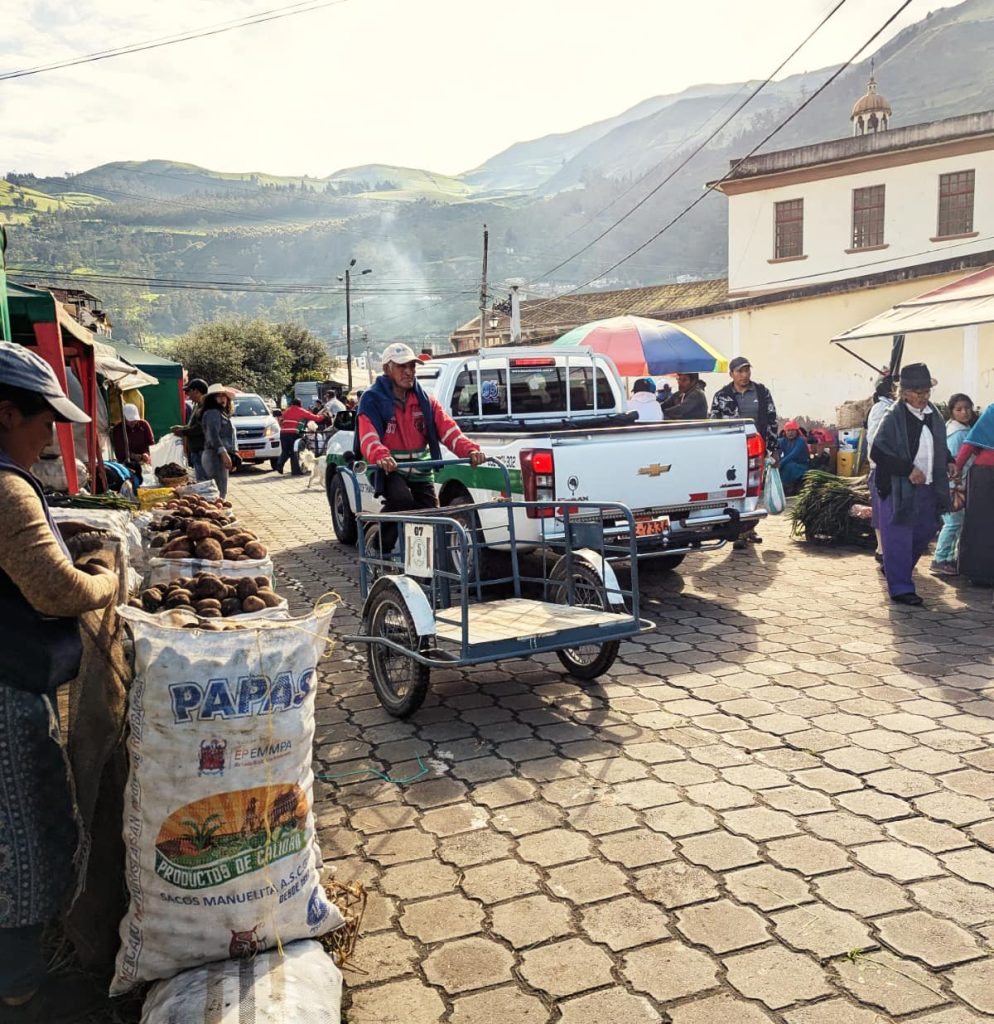
For me, the most memorable section was on the edge, away from the main market. Walking in, I passed large burlap sacks stuffed with potatoes, fitting given how central the potato is to food in this part of the Andes.
Then I spotted a family walk past carrying several similar burlap sacks. Except they were moving. It took me a second to place it: guinea pigs. For the family, it was just another Sunday at the market. For me, it was a small reminder that the same animal many keep as a pet is also dinner. But here the culture doesn’t draw a line between the two.

This is also where I sat down to a bowl of soup and tasted the most beautifully fried empanadas de viento, a traditional Ecuadorian food. As I was leaving the market, I stumbled onto a cart selling a snack I hadn’t seen before: mote (corn) topped with grilled chicken and curtido (pickled onion and tomato).
5. Climb to the Mirador
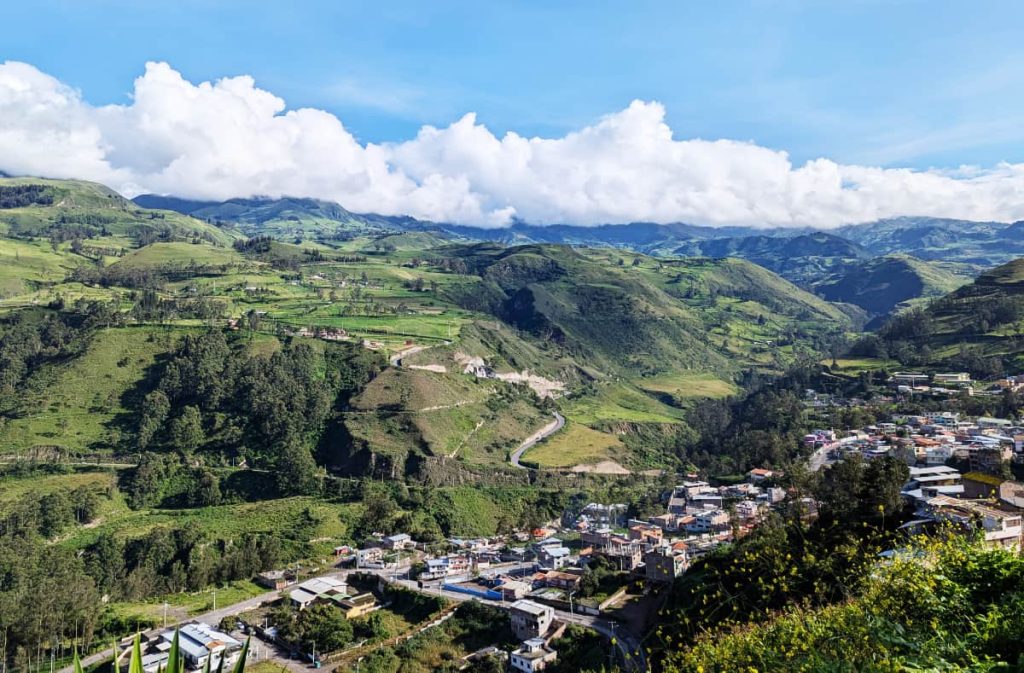
On the edge of town near the Sunday market, the street winds up to Mirador San Pedro and a statue that looms over the pueblo. If you’re walking, look for a set of stairs about 10 minutes past the start (map).
Other than the statue, there’s an area to sit overlooking the mountains and gorge below. It’s a similar view to the start of the Devil’s Nose hike. I wouldn’t say this is an absolute must thing to do in Alausí, but it’s a good spot to pause, catch your breath, and take in the town from a different angle.
6. Wander Around Town
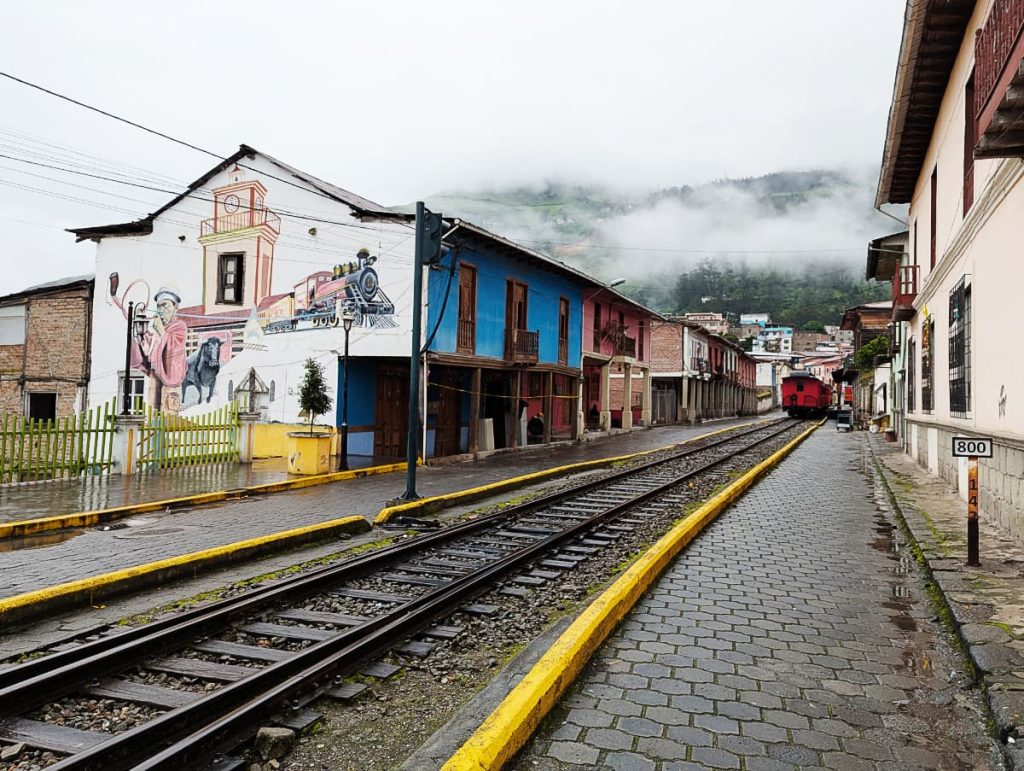
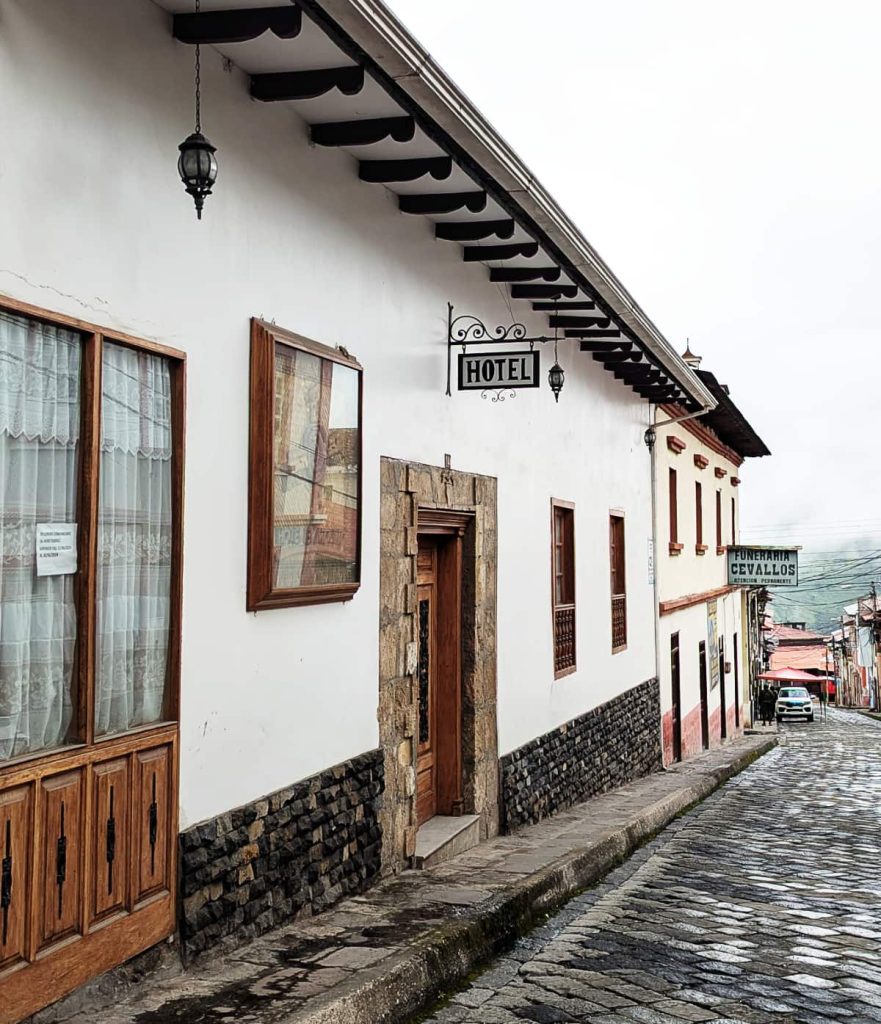
When you visit Alausí, the main street will show you the town. The cobblestone side streets will show you its people. Look out for several large murals depicting the region’s Indigenous heritage, the railway, and Andean landscapes.
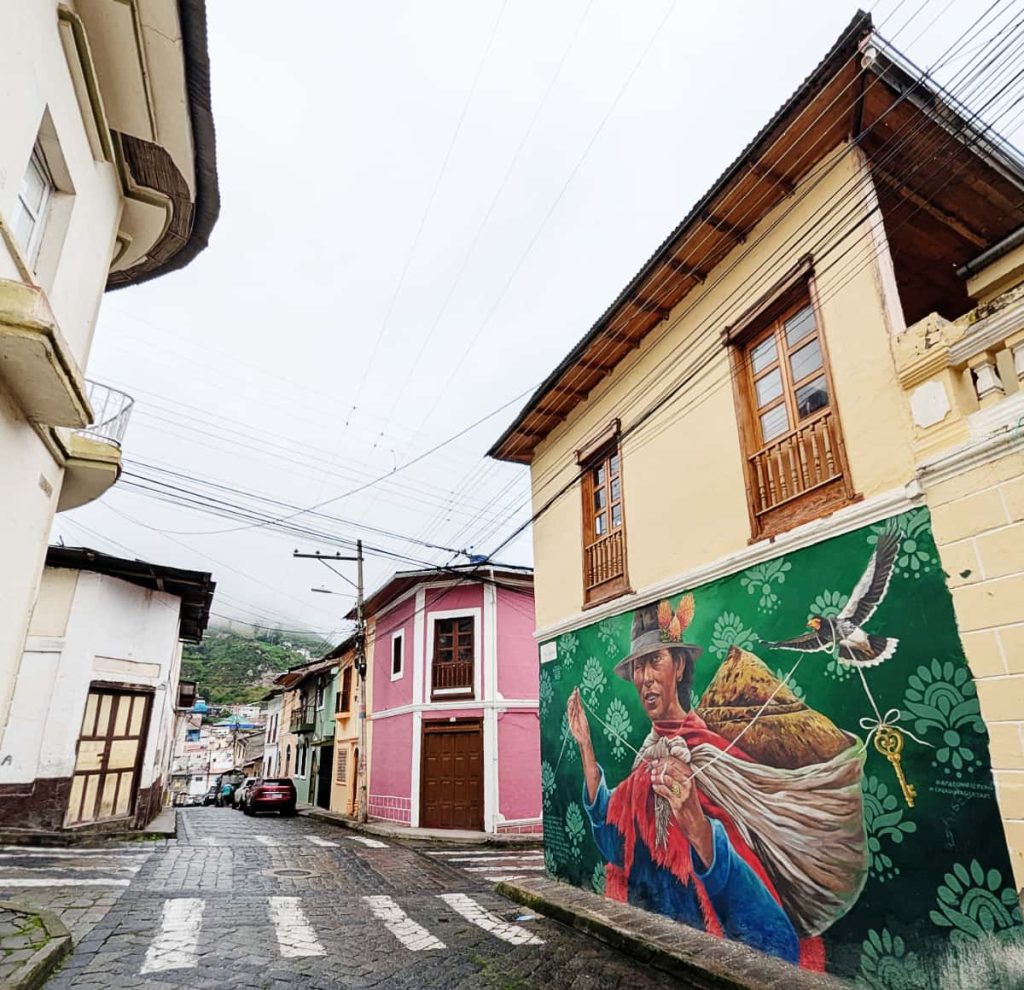
I set out one morning and found a frutería with a dog out front watching the town wake up. Later I ducked into a café for a hot chocolate to warm up. And in the afternoon I ran into a group of kids playing hide and seek.
You can also follow the train tracks to a bridge (Puente Negro) on the edge of town. It’s forbidden to cross but it was another nice spot to pause and watch the low clouds drift over the surrounding peaks.
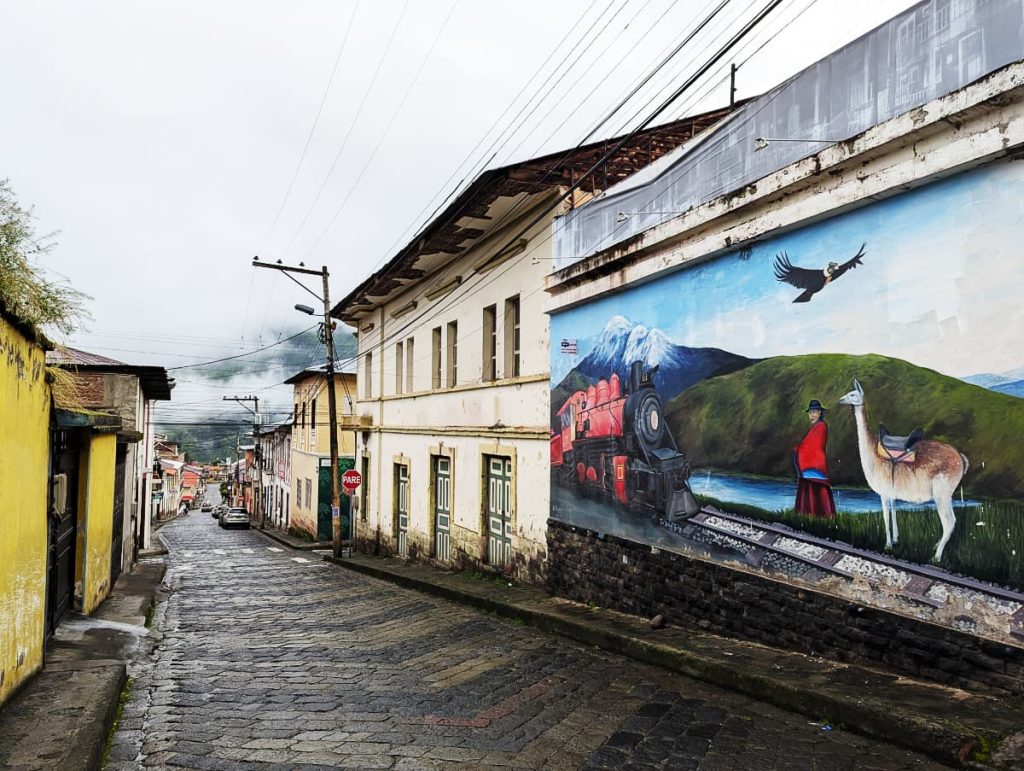
Did you know? Alausí was the second town in Ecuador to be named Pueblo Mágico, a designation the Ministry of Tourism reserves for places with a genuinely distinct identity. Alausí earned it in 2019 for its five heritages: natural, cultural, railway, archaeological, and agricultural.
7. Visit the Palmira Desert
Before I arrived, my friend from Ambato told me about the Palmira Desert, known for sand dunes at nearly 3300 meters elevation. It’s an odd, striking landscape for the Andes so I assumed it would be one of the top attractions in Alausí. Then the host at Community Hostel suggested I visit Lagunas de Ozogoche instead. I’m glad he did.
I never made it to Palmira but what I can tell you is that the dunes formed from erosion and decades of overgrazing on what was once páramo grassland, not a natural desert.
Locals later planted pine forest to help slow the erosion, which is why photos show the strange mix of golden sand and pine trees at high altitude. It’s popular for sandboarding, camping, and photography. It’s community-run with a small entrance fee that supports the local families who maintain it.
Getting there likely follows a similar pattern to the lagunas: a bus toward Guamote, get off along the highway, then local transport to the dunes. Or you can ask a mixto in town to take you all the way there.
Where to Eat
Several restaurants along the main strip serve a set lunch (almuerzo) for a great value. It typically includes a starter soup, main dish, dessert, and a drink.
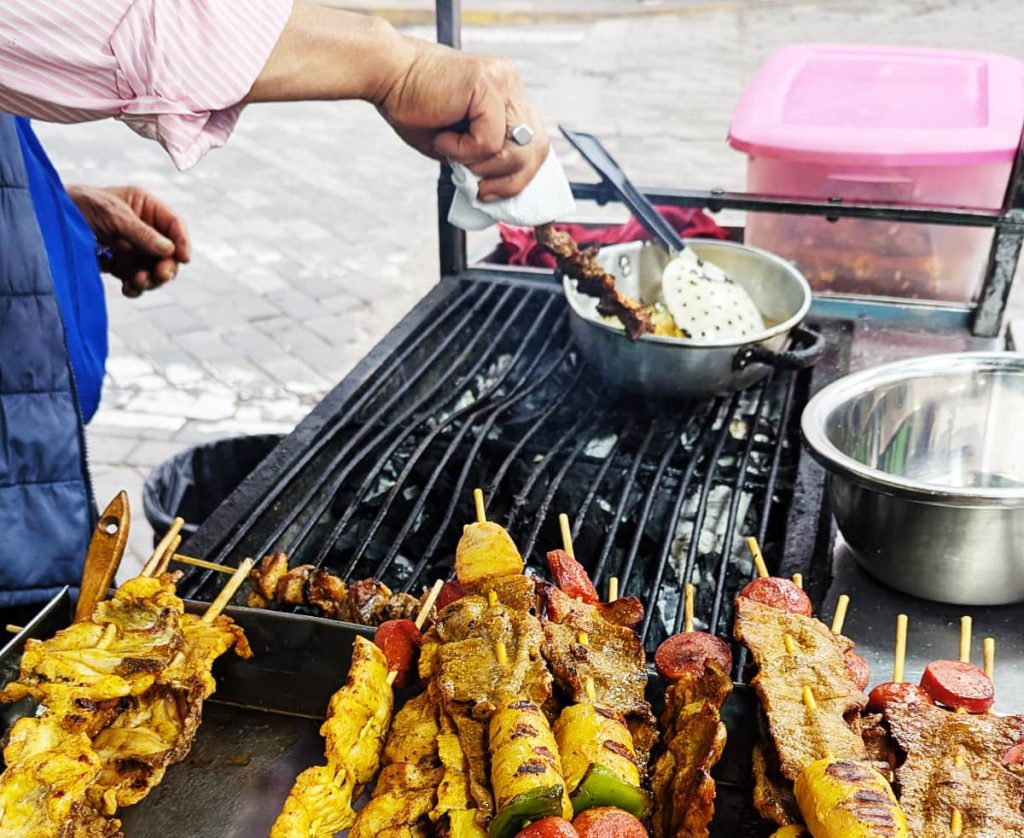
In the early evening, I also found a street cart selling a simple Ecuadorian street food called chuzos: grilled meat skewers with a piece of plantain on top. They made for a great evening snack when I didn’t want a full meal.
Where to Stay in Alausí Ecuador
The town is small enough that there are only a few places to stay in Alausí. My top picks depending on your style: a modern hostel built around community in a great location or a quaint hotel in Alausí centro.
Community Hostel Alausí
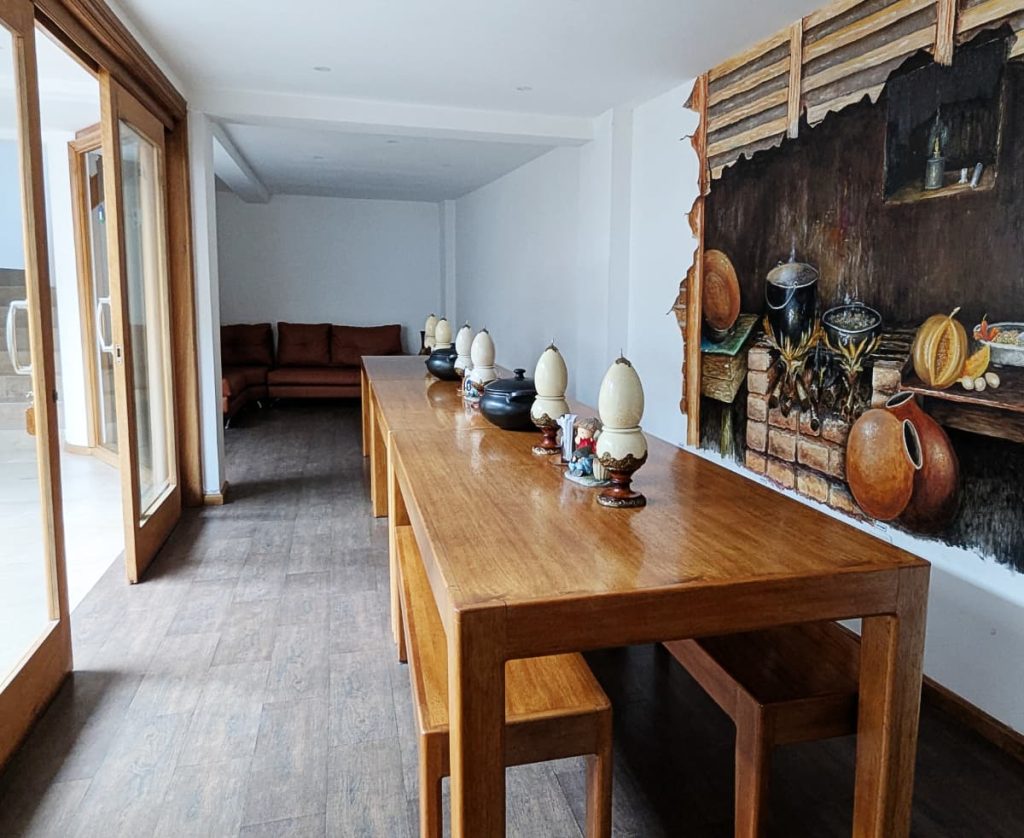
True to its name, Community Hostel in Alausí is built around a shared space to meet fellow travelers. The lower level features a gorgeous kitchen and a long wooden dining table that leads to a lounge area. I enjoyed making a cup of hot tea (hot water and tea provided) and sitting here to write or meet other travelers.
The rich wood finish throughout gives the hostel a cozy yet modern feel. Rooms include one eight-person dorm and private rooms, some with a mountain view. Breakfast is available for a reasonable price. Book a room at Community hostel to make it your base for exploring the rest of town.
Hotels in Alausí
If you’re looking for a hotel in Alausí with a more quaint setting, I recommend you book a room at Hotel Europa. It’s located in a traditional building with a central courtyard in the heart of town. Several of the rooms have multiple beds which is helpful if you’re traveling in a small group or family.
How to Get to Alausí
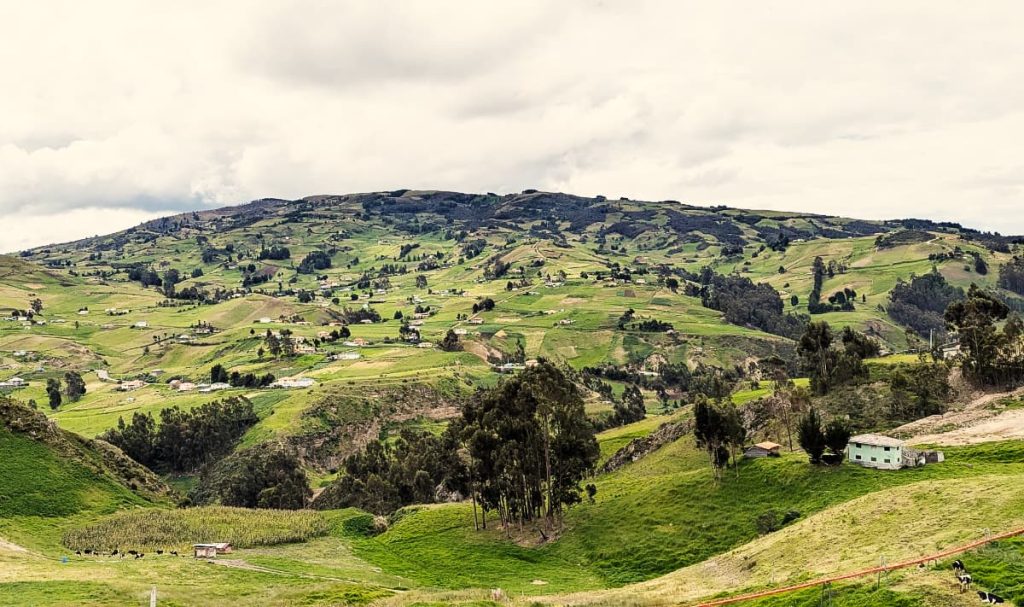
The rolling hills in this region were some of my favorite bus views of the entire trip. Whether you’re visiting Alausí from Cuenca or Banos, getting here takes a little planning since there’s not a lot of dedicated direct routes. But exploring this Pueblo Mágico itself is the reward.
Bus from Baños Ecuador
There’s not a direct bus from Baños to Alausí, so it’s best to take a bus to Ambato first and transfer to another. From there buses leave every few hours for the roughly 3.5 hour ride. There are also buses from Riobamba to Alausí.
If you’re traveling from Baños to Cuenca, the bus makes a 30 minute lunch and bathroom break on the highway at the entrance to Alausí. I believe you can get off with your luggage and catch a mixto to town, but you should check at the bus station in Baños. The bus times are limited to 8:45 am and a night bus which I don’t recommend since you would arrive around 4 am.
Bus from Cuenca to Alausí
Buses leave regularly from the bus station in Cuenca for the roughly 4 hour ride to Alausí. Some buses take you all the way into town which is ideal. When I took the bus to Alausí from Cuenca, I got off at the highway, went inside the same store we had lunch about a week earlier and asked them about the mixtos to take me into town which worked well.
Wrapping Up Visiting Alausí Ecuador
Most people add a trip to Alausí to their itinerary just for the train ride. But between the Devil’s Nose hike, the Sunday market, the nearby lagunas, and a town that rewards slow wandering, Alausí, Ecuador holds its own as a destination.
Give it a night, maybe two, and this Pueblo Mágico stops feeling like a stop along the route and starts feeling like a destination in its own right.