
10 Weird Foods in Mexico: A Local’s Guide to What to Order

Ant larvae. Cow stomach. Insect eggs. Weird foods in Mexico exist, but to Mexicans they aren’t exotic at all. Weird is relative, and it goes both ways.
Take my mom for example. She can’t stand peanut butter and jelly or a bowl of mac and cheese, foods most people in the US grew up on. So when people call Mexican food “weird,” I always raise an eyebrow.
I grew up eating most of these weird Mexican dishes. They’re staples in kitchens and street stalls across the country. But I get it: if you didn’t grow up with them, some can be a genuine shock.
Here are 10 dishes and drinks that might raise your eyebrows, and your appetite!
1. Huitlacoche
Huitlacoche is a fungus that infects corn, causing individual kernels to swell and turn a distinctive blue-grey to black. In other countries, this growth is considered a blight that farmers work hard to avoid. In Mexico, it’s a delicacy.
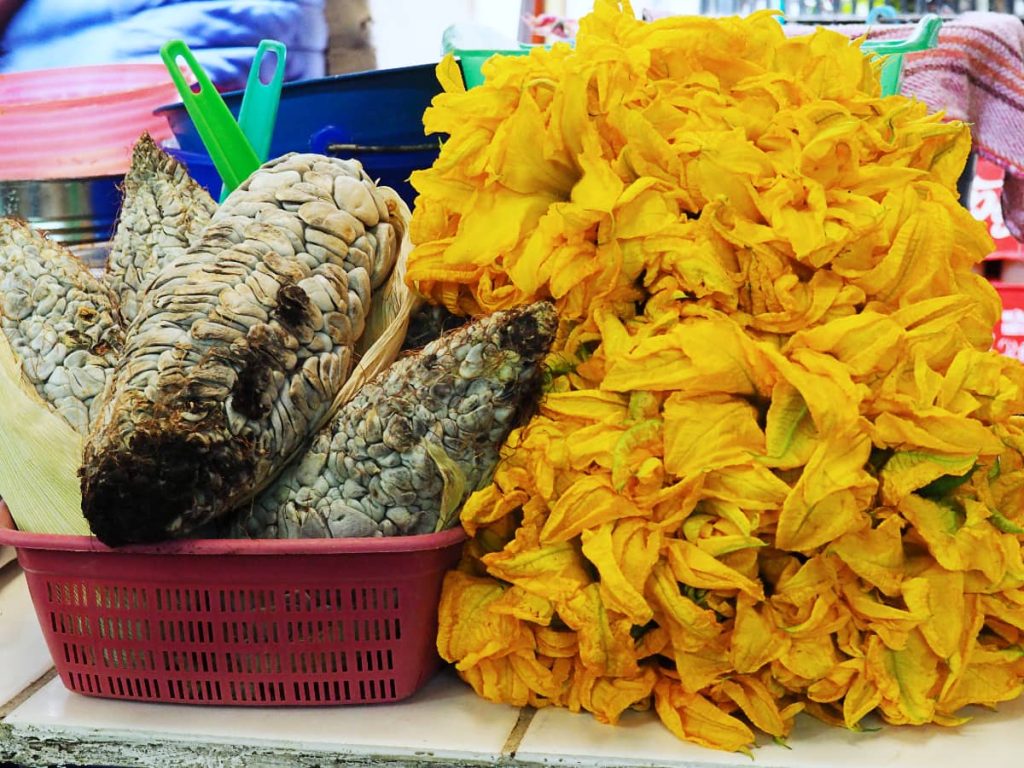
Huitlacoche is prepared dozens of different ways across the country. In central Mexico it’s often sautéed with onion, garlic, and epazote (a truly funky herb whose name means “skunk sweat” in Nahuatl) or served in quesadillas or tacos. Depending on the preparation, the flavor can be mild, a little sweet, earthy and funky with a mushroom-like texture.
My top recommendations: eat it as a quesadilla filling or sprinkled on top of a fresh blue corn tlacoyo, a popular street food in Mexico City. For something different, I’ve also enjoyed huitlacoche in risotto, soups, and creamy pasta sauces.
2. Hongos de Maguey
Every rainy season, something strange starts pushing through the soil around the base of maguey plants across central Mexico: clusters of pale, oyster-like mushrooms known as hongos de maguey.
Families who know where to look forage them straight from the fields, and if you’ve ever had oyster mushrooms sautéed with a little garlic, you already have a decent idea of what you’re in for. They’re mild, meaty, and satisfying.
What earns them a spot on this list of weird foods in Mexico isn’t the flavor, it’s the where. These mushrooms don’t come from a farm or a grocery shelf. They grow wild around one of Mexico’s most iconic plants, and their season is short.
If you’re traveling through central Mexico during the rainy months and see them on a menu or piled up at a Mexico City market, that’s your cue to order it.
3. Quelites
Quelites are proof that many of these weird Mexican foods aren’t weird at all, they’re resourceful. Where others see weeds growing in their garden, we see the makings of a great meal.
So what exactly are quelites? The word comes from Nahuatl quilitl meaning tender, edible herb or plant, and encompasses dozens of different plants woven into the Mexican diet. Below are a few you’ll likely run into on your travels through Mexico.
Huazontles – Think of Huazontles as a prehispanic broccolini with more head than tail. The most classic preparation is huazontles capeados: the stalks are bundled up, stuffed with cheese, dipped in a fluffy egg batter, fried, and then simmered in a guajillo or tomato sauce. It’s the dish that made me love eating vegetables as a kid.
Verdolagas – Known in English as purslane, verdolagas are small, teardrop-shaped leaves with thick, succulent stems that grow low to the ground (you may have pulled these out of your own yard without knowing they were edible). The flavor is slightly tangy, with a lemony bite. You’ll find verdolagas stewed in salsa verde with pork, eaten fresh in salads or used as a garnish for tostadas.
Romeritos – Every year during semana santa my mom makes romeritos, a quelite with a salty, herbal flavor. My favorite way to eat them is tortitas: shrimp and romero cakes cooked in mole. Prior to Spanish colonial rule, this dish was often made with Ahuautle, tiny aquatic insect eggs (an exotic food you’ll find later on this list).
Papaloquelite – This wild green tastes a bit like arugula, minus the bitter notes. Zesty, punchy, and peppery, it’s a key ingredient in cemitas, one of the most iconic Mexican sandwiches. The herbaceous zing cuts right through the heaviness of a cemita.
Want to learn more about quelites? Check out these cooking classes in Mexico City.
4. Tacos de Cabeza
Tacos de cabeza are among the most popular types of tacos in Mexico. They use cuts of meat that come from the head of the cow: eye, tongue, cheek, lips and more. While these cuts of meat may sound daunting, I promise the flavor is anything but.

Cheek and tongue, especially, are tender, flavorful cuts of meat with a mild taste. They’re closer in flavor and texture to a well-cooked pot roast than anything alarming. If you want a low-stakes way in, start there.
The taco stands that specialize in cabeza steam the meat for hours until it’s practically falling apart. By the time it hits your tortilla, you’re not thinking about which part of the animal it came from, you’re thinking about ordering a second one!
5. Menudo
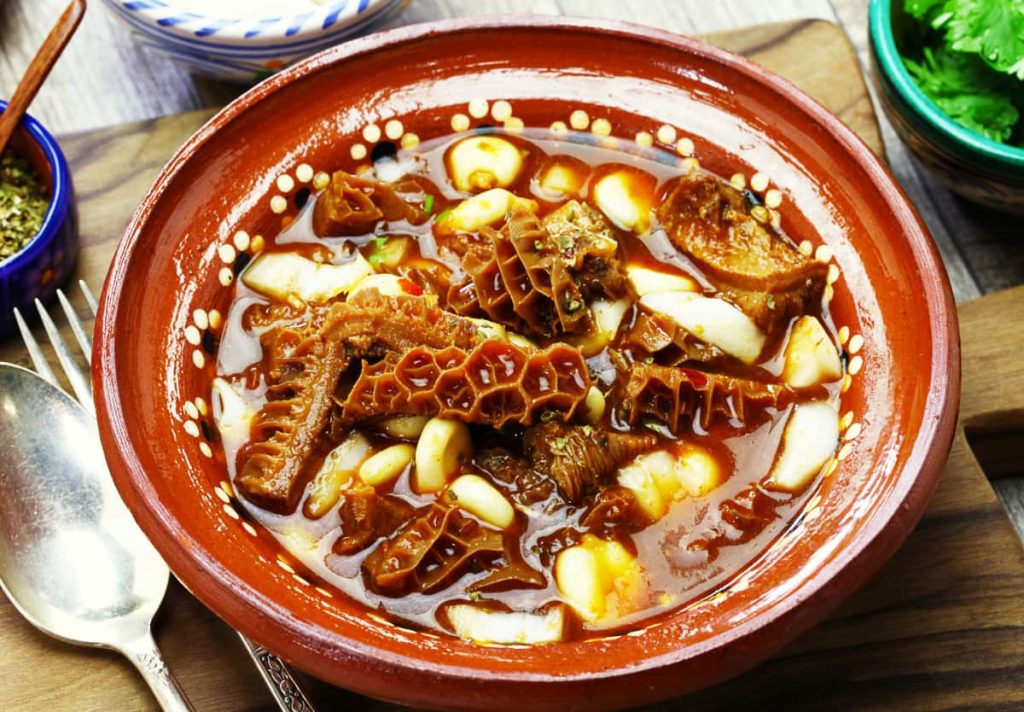
Menudo is one of the most popular foods in Mexico, especially on weekend mornings. It’s the dish families gather around after a long night since it’s said to cure everything from a cold to a hangover. But for travelers, it’s also one of the weirdest Mexican dishes, because it’s made with beef tripe (the stomach lining of a cow).
It’s simmered for hours in a deep red chile broth until it turns tender, with a chew that’s closer to calamari than anything you’d expect from “stomach.”
Menudo comes with a mountain of toppings: chopped onion, diced serrano chile, lime, and a stack of warm tortillas. If you can get past the mental hurdle of what it is, menudo is comfort food in its purest form: rich, warming, and deeply savory. I’d put it up there with the best soups in the country.
6. Weird Meats
I recently went to Oaxaca with my aunt who hadn’t been back to Mexico in 15 years. When we sat down to eat at a local fondita, the server brought us two bowls of chicken broth with the feet floating in them. As she chewed on the sinewy chicken foot, my aunt exclaimed, “It’s hard to get fresh chicken feet in Iowa!”
Chicken foot soup was a regular occurrence at my home, but I know many travelers aren’t used to seeing every part of the animal put to use. Here in Mexico, it’s tradition, nothing goes to waste. From my experience growing up eating weird meats, here are some cuts worth trying:
Feet – prepared in flavorful soups, stews and sauces, the long cook time helps tenderize these tough cuts and break down the collagen. Beyond the chicken foot soup from my aunt’s trip, you’ll also find pork trotters cooked in black bean sauce.
Cueritos – pickled pork skin sliced into thin strips, marinated in vinegar with chile and spices, and served cold. You’ll see them piled on tostadas, added to tostilocos (tortilla chips with cueritos, cucumber, jicama, chamoy, lime, and Tajín) or eaten on their own as a tangy, gelatinous snack. The texture takes some getting used to, but the vinegar-forward flavor is genuinely addictive once it clicks.
Offal – Offal has many preparations, from liver soup served in local eateries to deep fried brain quesadillas available on the streets of Mexico City. While I love offal, the flavor and texture is an acquired taste. My personal recommendation for first timers? Brain quesadillas. While it sounds wild, the creamy texture and mild flavor make it a surprisingly gentle introduction to the world of offal.
Tripa – Tripa, or tripe (animal intestines) puts the weird in Mexican dishes you already know: tacos, tamales, and soups to name a few. Tripa is one of the most tender cuts of meat, with a satisfying chew and a flavor that soaks up whatever sauce and spices it’s cooked with.
7. Bugs: Chapulines, Chicatanas, Gusanos + More
If there’s one category on this list that trips people up before they even try it, it’s bugs. Eating insects in Mexico is a tradition that goes back to indigenous cuisine, long before the Spanish arrived. Once you get past the initial hesitation, most of these taste more familiar than you’d imagine. Here’s what to look for:
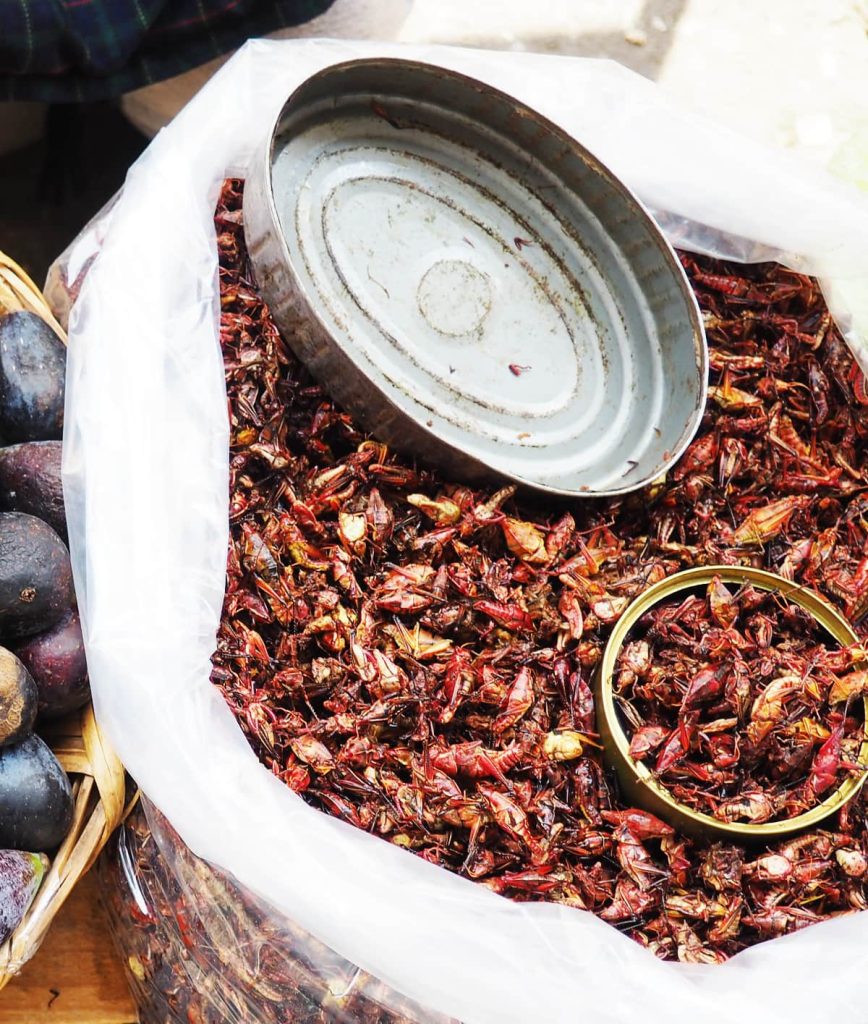
- Chapulines – Toasted grasshoppers are sold outside of markets by the basketful. You’ll find them folded into salsas, tucked into tlayudas and quesadillas, sprinkled on snacks like esquites or as a garnish for guacamole. They are crunchy, salty, and smoky, with a strong herbal flavor.
- Chicatanas – Large flying ants appear for just a few days each year, arriving in southern Mexico with the start of the rainy season. They’re toasted and ground into salsas, moles, or wrapped in a tortilla with a little lime, chili and salt. They have a nutty, roasted flavor profile.
Did you know? Chicatanas are highly prized. A single kilo can sell for up to 2,000 pesos (more than $100 USD), making them one of the most expensive edible insects in Mexico.
- Gusanos – As a kid, whenever I was restless, my mom would tease me by saying “te mueves como chinicuil en comal” (“you move like a worm on a hot griddle”). This typical Mexican saying shows just how deep bug eating runs in our culture. Chinicuiles and other worms are toasted over a comal and eaten alone or ground into a smoky, spicy powder (sal de gusano) and served along with orange wedges when drinking mezcal or tequila. While “worm salt” might sound like an ingredient in witch’s brew, in Mexico it’s just a bar snack.
Want to discover more bar culture in Mexico? Check out our favorite cantinas in Mexico City for a fun afternoon. Or the best rooftops if that’s more your style.
- Escamoles – I recently ate escamoles for the first time on my birthday this year at a local restaurant in Tlaxcala, Mexico. I have to admit I was hesitant to wolf down sopes covered in ant larvae, but I got past it by telling myself “Your ancestors ate these for millenia before you, you’ll be fine!” With that, I took my first bite and was pleasantly surprised. Escamoles have a mild taste and creamy texture. They work well as a topping for masa-based dishes like tlacoyos and sopes.
- Ahuautle – Ahuautle takes the “bug” category to another level: it’s the eggs of a tiny aquatic insect called the axayácatl, harvested mainly from the last remaining wetlands of Lake Texcoco and in small amounts from the canals of Xochimilco near Mexico City. The eggs were traditionally collected on hand-woven reed nets, then dried and worked into dishes like tortitas capeadas de ahuautle (battered fritters served in salsa). The flavor is often compared to dried shrimp, briny and a little fishy. Some call it Mexican caviar. These days it’s genuinely rare, so if you find it on a menu, take the opportunity to taste an exotic food in Mexico that’s sadly disappearing.
8. Tamales de Iguana
Eating iguana has deep roots in Oaxaca’s isthmus region, where it’s long been an easy, reliable source of protein for coastal and rural communities.
The meat itself is surprisingly unintimidating: mild, somewhere between chicken and white fish, with a flaky texture. Iguana shows up in stews and soups, but it’s most famous stuffed into a tamal, one of the more unique types of tamales you’ll find.
The meat is simmered down with mole amarillo, wrapped in fresh corn masa and a banana leaf, and steamed until tender. The mole does a lot of the heavy lifting flavor-wise, so what lands on your plate tastes far more like a rich, savory tamale than anything exotic.
A quick note before you dig in: iguana are a protected species in Mexico, and regulations around hunting and consuming them vary by region, with extra restrictions during breeding season to protect the population.
The most ethical way to try it is to seek out iguana raised on a licensed farm (called a UMA) rather than one caught in the wild. It’s a dish with real cultural roots, but also one worth approaching thoughtfully.
9. Leche Quemada
Leche quemada, or scalded milk, is one of the most common flavors you’ll find in paletas, nieves, and ice cream across Mexico. Every foreign friend who visits me is required to try it and not one has enjoyed it on the first bite!
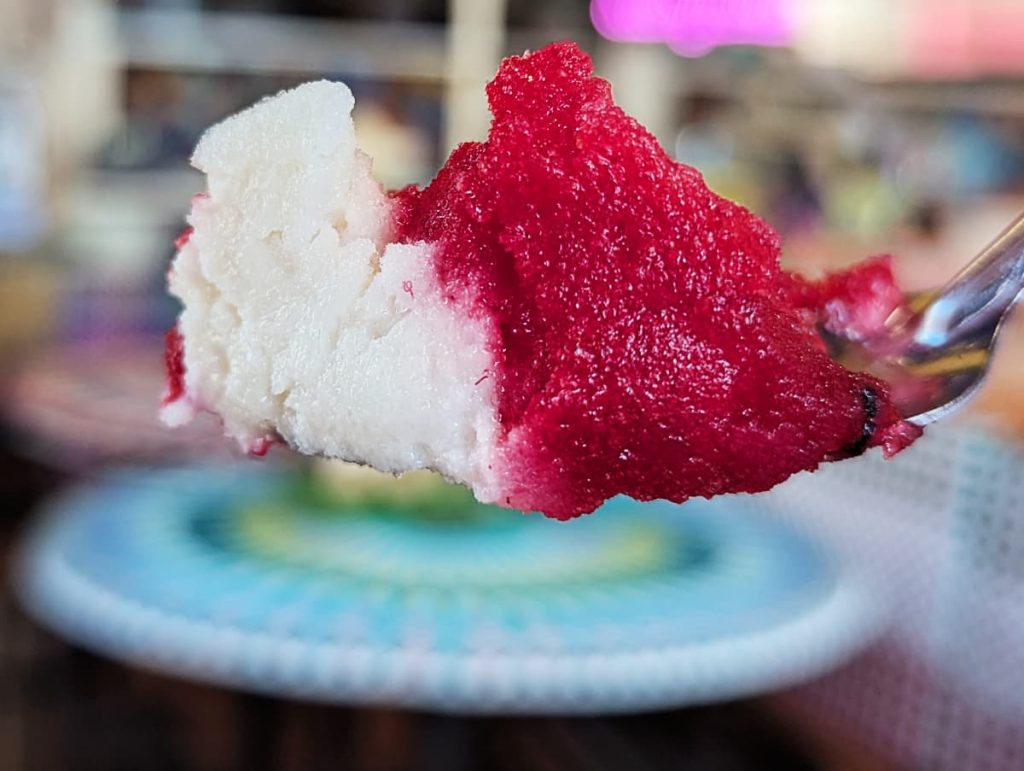
The flavor is exactly what the name suggests: burnt milk. That “burnt” note goes beyond caramelized, giving it a slightly acrid, bitter edge which is exactly why I love it.
Some of the best flavor combinations are sweet and bitter: think of coffee with something sweet or grapefruit with a sprinkle of sugar. . That bitter note gives the flavor profile a complexity and richness it wouldn’t otherwise have.
In Oaxaca, you’ll often find leche quemada paired with tuna, and no, I don’t mean the fish. Tuna is the Spanish name for prickly pear fruit. Its juicy, sweet flavor cuts through the bitterness. It’s one of my favorite combinations to order, and usually the one that finally gets my skeptical friends to come around.
10. Pajarete
I’ll admit, I’ve only ever seen pajarete online. It’s not something I grew up around, but it’s earned its spot on this list for how genuinely strange (and risky) it is.
Pajarete is a morning drink from rural Jalisco, traditionally made by ranch hands right after milking a cow. Fresh, unpasteurized milk is mixed with cane alcohol, sugar, and chocolate or coffee powder. It’s drunk as a liquid energy boost before a full day of work.
A serious note: pajarete has picked up the nickname “drink of death” in some regions after a string of deaths and illnesses linked to it. The cause wasn’t the raw milk, it was adulterated cane alcohol used in some batches.
If you’re genuinely curious about trying it, do your homework first and only drink it from a source you trust. This deep dive on the tradition does a good job walking through both the ranch culture behind it and the real safety concerns. It’s worth a read before you go looking for a glass.
What are some weird Mexican foods?
Weird Mexican foods include insects and larvae like chapulines, chicatanas, and ahuautle (aquatic insect eggs), along with exotic meats like iguana. Many of these dishes aren’t actually unusual within Mexico. They’re beloved regional staples, but they can be a real shock for travelers unfamiliar with nose-to-tail cooking or eating insects.
Wrapping Up Weird Mexican Dishes
So is weird Mexican food actually weird? At the end of the day, it’s all a matter of perspective. Every dish on this list exists because someone, somewhere, decided nothing on the animal or the land should go to waste and turned that necessity into something worth savoring.
The real shock isn’t the ant larvae or the tripe, it’s realizing how much flavor and history you’d miss by sticking to what’s familiar. So the next time a menu in Mexico makes you raise an eyebrow, take that as your cue to order. After all, you never know what you’re missing until you try it!